Where Concrete Meets Choreography: The Artists Rewriting the Rules of American Public Space
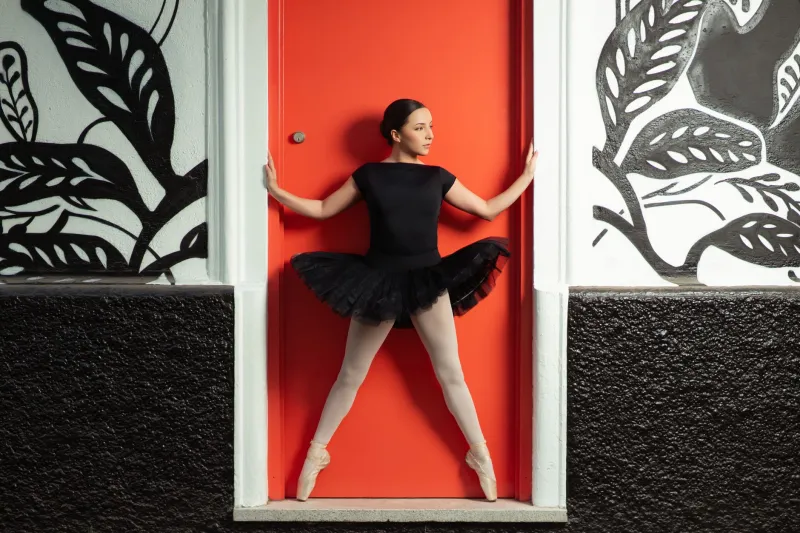
There is a particular kind of stillness that settles over a neighborhood mural at dusk — the painted figures frozen mid-gesture, the colors deepening as the light changes, the wall holding its breath. Now imagine that stillness interrupted. A dancer steps into the frame, her movements echoing the arched back of a figure painted above her, and suddenly the boundary between the fixed and the living dissolves entirely.
This is the experience that a growing number of collaborative artists across the United States are deliberately engineering. At the intersection of visual art and performance, muralists and dancers are discovering that their disciplines, long practiced in separate rooms, speak a remarkably similar language when placed in conversation with one another.
A Movement Taking Root in American Neighborhoods
The phenomenon is not confined to any single city or artistic community. In Brooklyn's Bushwick neighborhood — long regarded as one of the most concentrated outdoor gallery spaces in the country — collectives have begun staging site-specific performances that treat existing murals as active backdrops rather than passive scenery. In Los Angeles, organizations working within the Chicano art tradition have invited contemporary dancers to animate murals that have anchored community identity for decades, layering new meaning onto images that residents have passed for years without fully seeing.
In Chicago's Pilsen neighborhood, a predominantly Mexican-American community with a deep mural tradition, artist partnerships have drawn hundreds of residents to after-dark performances that transform familiar street corners into theatrical environments. Philadelphia's Mural Arts Program, one of the largest public art initiatives in the nation, has begun incorporating movement-based programming into its community engagement model, recognizing that dance offers a form of access that a painted wall alone cannot always provide.
What unites these efforts is a shared conviction: that public art, at its most powerful, does not simply occupy space — it activates it.
The Dialogue Between Movement and Image
For muralists, collaborating with dancers requires a fundamental rethinking of composition. When a wall is understood not merely as a surface to be viewed but as a stage to be inhabited, decisions about scale, negative space, and sightlines take on new significance. Artists report approaching their designs with an almost choreographic sensibility, considering how a human body in motion might relate to each element of the image.
Dancers, for their part, describe the experience of working within a mural environment as both liberating and demanding. The imagery imposes a visual grammar that the body must respond to rather than override. A dancer performing in front of a mural depicting flight cannot simply ignore that context; the work requires her to enter into a conversation with it, to find in her own movement some reflection or counterpoint to what the painter has already expressed.
This creative tension — between the fixed and the fluid, the painted and the performed — is precisely what many practitioners cite as the most generative aspect of the collaboration. The mural anchors the performance in place and history. The dance returns the image to the present tense.
Community as Both Audience and Participant
Perhaps the most significant dimension of these collaborations is their relationship to the communities in which they occur. Unlike gallery exhibitions or ticketed theater performances, public art experiences are, by definition, uninvited. They arrive in spaces where people already live, work, and move through their daily routines. This quality demands a particular kind of artistic humility.
The most successful collaborative projects are those rooted in genuine community partnership — where local residents have participated in the mural's creation, where the dancers reflect the cultural backgrounds of the neighborhood, and where the performance itself is designed to be witnessed by people who may never have attended a formal arts event. In these instances, the work functions less as entertainment delivered to an audience and more as a shared act of recognition, a community seeing itself reflected and animated simultaneously.
Organizations working in this space consistently emphasize the importance of sustained relationships over one-time interventions. A single evening performance, however striking, cannot substitute for the months of conversation, trust-building, and collaborative design that make such work genuinely resonant.
Technical Realities and Creative Constraints
The practical challenges of merging these two disciplines in public environments are considerable. Outdoor performances contend with weather, ambient noise, uneven surfaces, and the unpredictable behavior of passersby. Lighting design — so central to theatrical dance — must be reconsidered entirely when the performance space is a sidewalk or a parking lot. Sound systems capable of projecting music across an open urban environment without disturbing residents present their own logistical complexities.
For the dancers themselves, performing on concrete and asphalt rather than sprung studio floors introduces real physical considerations. Footwear, warm-up routines, and movement vocabularies must all be adapted to surfaces that offer neither the give nor the grip of a stage. These constraints, however, often prove creatively productive. Limitations imposed by the environment push performers toward movement choices they might not otherwise discover, and the rawness of outdoor performance — its exposure, its vulnerability — frequently communicates something that the controlled atmosphere of a theater cannot replicate.
Redefining the Boundaries of Public Art
The collaborations emerging across American cities suggest that the traditional categories organizing the art world — visual art, performance, community engagement — are becoming increasingly insufficient as frameworks for understanding what artists are actually making. When a dancer and a muralist co-create an experience that unfolds over several hours on a neighborhood street, inviting residents to watch, participate, and carry something of it forward into their daily lives, the result resists easy classification.
What it does not resist is feeling. The testimony of those who have witnessed these collaborations consistently returns to the same quality: the sense of being surprised by beauty in a place they thought they knew entirely, of discovering that a wall they had passed a thousand times contained a dimension they had never perceived until a body moved in front of it.
In that moment of discovery — when ink and movement converge in a space that belongs to everyone — something essential about the purpose of art is made plain. It is not merely to be seen. It is to make the world, briefly and unmistakably, more alive.