Borrowed from the Painter's Palette: How Choreographers Are Rewriting Movement Through Visual Art Methodology
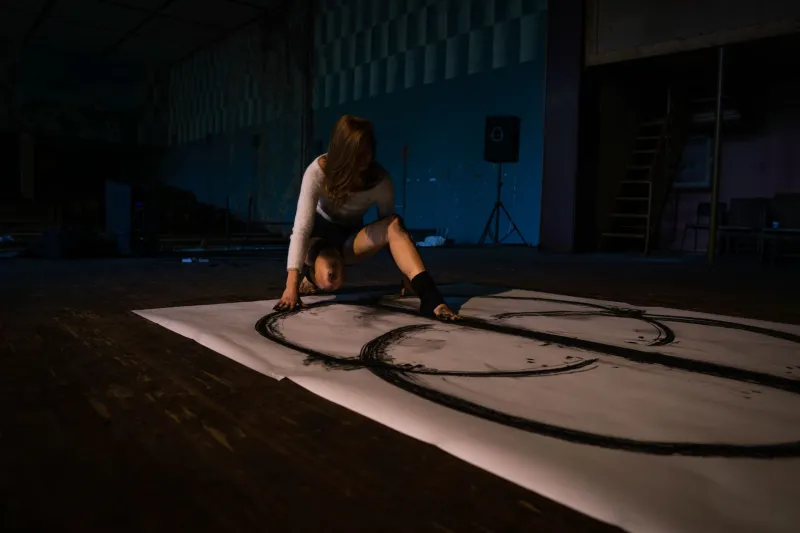
There is a particular quality of attention that painters bring to blank space—a discipline of seeing what is not yet there, of understanding that absence is as active as presence. In rehearsal rooms across the United States, a growing number of choreographers are cultivating that same quality of attention, and using it to build movement vocabularies that feel, to audiences, unmistakably different. Not louder or more technically demanding, but somehow more considered. More composed, in every sense of the word.
The crossover between dance and visual art is hardly new territory for Ink & Dance. But what distinguishes the current moment is the specificity with which choreographers are engaging with painting methodology—not as metaphor, not as aesthetic inspiration, but as a practical, procedural framework applied directly to the construction of movement.
The Underpainting Principle
In oil painting, underpainting refers to the initial monochromatic layer applied to a canvas before color is introduced. It establishes tonal structure, defines shadow and light, and gives the finished work its internal coherence. Strip away the surface and the underpainting remains—a hidden architecture that holds everything together.
Several choreographers working in contemporary American dance have begun applying an analogous principle to their rehearsal process. Rather than building movement outward from a stylistic identity or a musical phrase, they begin with what might be called a structural draft: a sequence of shapes and spatial relationships stripped of dynamic quality, performed at a uniform tempo without expressive inflection. This skeletal version of the work—its underpainting—is refined until the spatial logic is sound. Only then is intention, energy, and texture layered on top.
The result, practitioners report, is choreography that retains its integrity even when performed by different bodies or in unfamiliar spaces. The surface may shift; the structure does not.
Negative Space as Choreographic Voice
For painters, negative space—the area surrounding the primary subject—is not emptiness. It is form. It defines the edges of what is present by articulating what is not. Skilled painters manipulate negative space to direct the viewer's eye, to create tension, to suggest movement within a static image.
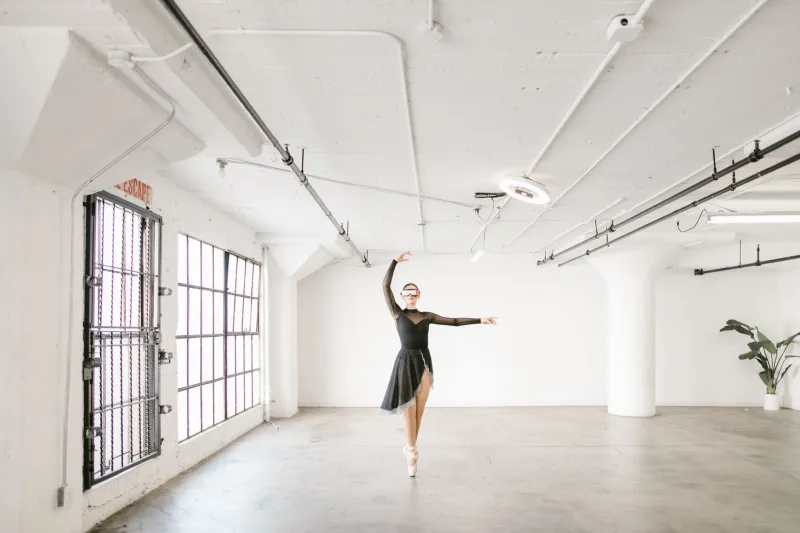
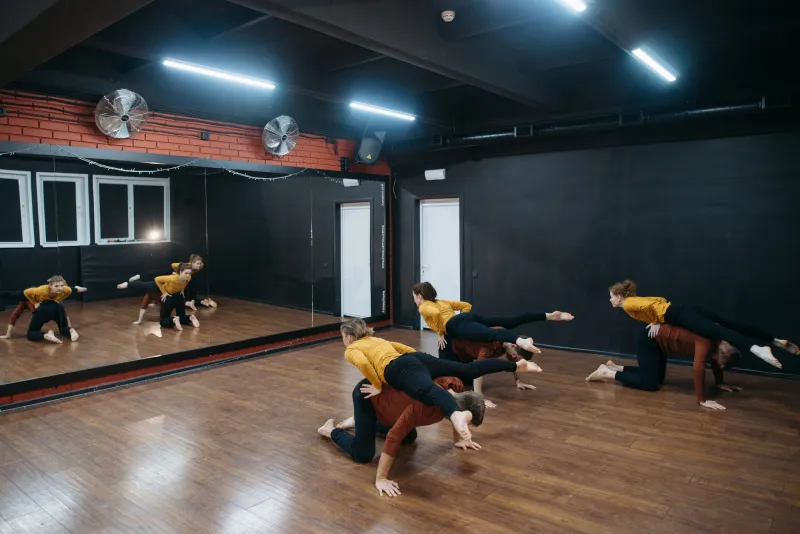
Choreographers who have absorbed this principle are applying it to the stage with striking results. Rather than filling every moment with gesture or locomotion, they are actively designing the pauses, the stillnesses, and the gaps between dancers as compositional elements equal in weight to the movement itself. The space between an outstretched arm and another body is treated not as interval but as shape. The moment before a weight shift is not dead time but held form.
This approach demands an unusual quality of presence from performers, who must sustain the integrity of a still shape with the same intentionality they bring to a phrase in motion. It also demands a recalibration from audiences accustomed to reading dance as a sequence of events rather than a continuous spatial composition.
Color Theory and the Architecture of Energy
Perhaps the most conceptually ambitious borrowing from painting methodology involves color theory. In visual art, color carries temperature, weight, and emotional frequency. Warm colors advance; cool colors recede. Complementary colors placed in proximity intensify one another. Tonal contrast creates focal points and guides perception.
Some choreographers have begun constructing movement scores using color as a structural metaphor—not in the sense of literal visual color on stage, but as a framework for organizing energy, rhythm, and spatial proximity. A phrase might be designated as warm: forward-moving, expansive, high in kinetic energy. Another might be cool: contained, inward, slow to resolve. The relationship between these phrases—how they are sequenced, where they make contact, how much space is allowed between them—is governed by principles borrowed directly from color composition.
The choreographic implications are significant. Color theory provides a vocabulary for discussing contrast, harmony, and emphasis that bypasses the often-imprecise language of emotional intention. It gives rehearsal rooms a shared technical framework that is specific without being prescriptive.
What the Studio Looks Like Now
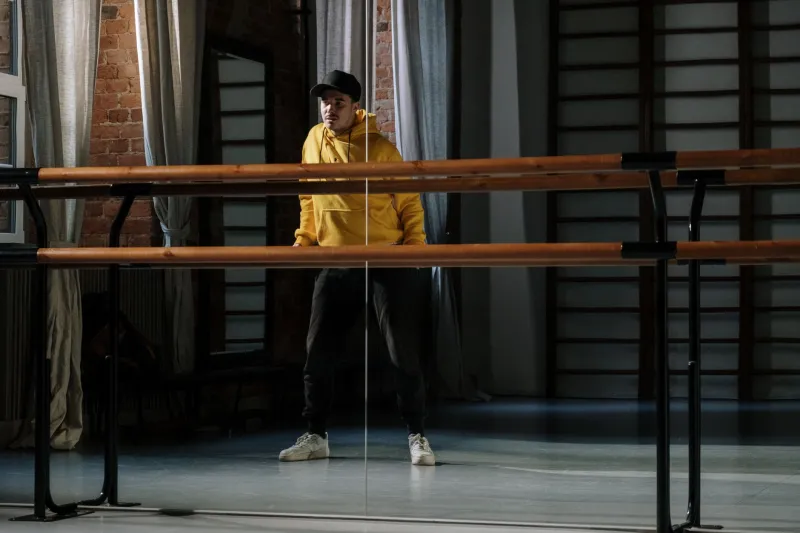
In practice, rehearsal rooms engaged in this kind of cross-disciplinary work tend to look different from conventional dance studios. Walls carry reproductions of paintings—not for aesthetic decoration but for active reference. Rehearsal notes may include annotated sketches of spatial arrangements rendered in graphite or colored pencil. Some choreographers maintain what might be called a painter's journal alongside their choreographic score: a visual record of compositional decisions, color relationships, and spatial problems worked out on paper before they are attempted on the floor.
This visual documentation serves a function distinct from traditional notation systems. It captures intention and relationship rather than position and timing. It is less a record of what happened and more a map of how the work thinks.
The influence of this practice extends to how choreographers communicate with their dancers. Instructions that once relied on kinesthetic cues—feel the weight, find the impulse—are increasingly supplemented with visual language. A dancer might be asked to consider whether a particular gesture reads as foreground or background, whether a sequence of shapes carries tonal contrast, whether the negative space of a partnering section is as clearly defined as its movement content.
A New Movement Language
What emerges from studios engaged in this methodology is not dance that looks like painting—the confusion of medium is not the goal. What emerges is dance that thinks like painting: that concerns itself with composition as a spatial and temporal whole, that treats absence as a material, that understands contrast and harmony as structural rather than decorative principles.
For American audiences, who encounter dance largely through the lens of theatrical spectacle and athletic virtuosity, work produced through this methodology can feel disorienting at first. It asks for a different kind of looking—slower, more lateral, less focused on individual bodies and more attuned to the relationships between them.
But that disorientation may itself be the point. By importing the painter's discipline of seeing into the rehearsal room, these choreographers are training audiences, gradually, to perceive movement the way a painter perceives a canvas: as a field of relationships in which every element, including the empty ones, carries meaning.
The rehearsal room, in this sense, has always been a kind of studio. What has changed is the awareness of it.