Performed for No One, Witnessed by Everything: The Radical Intimacy of Dance Made in Private
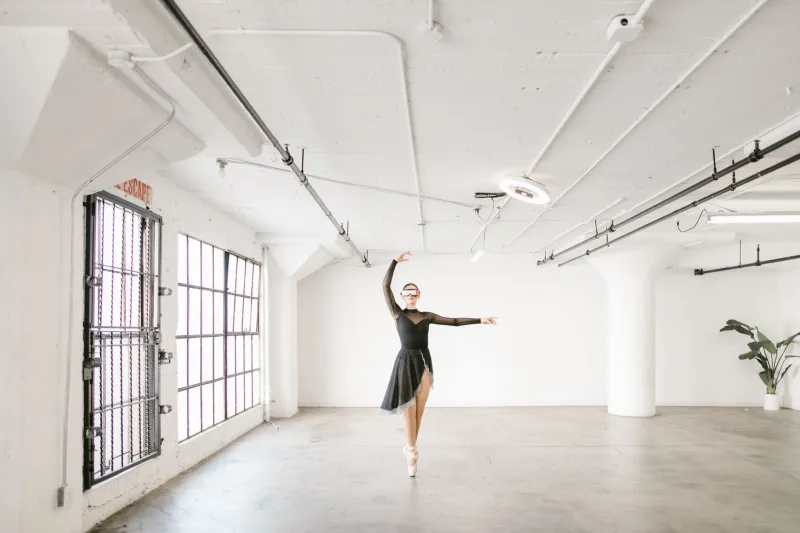
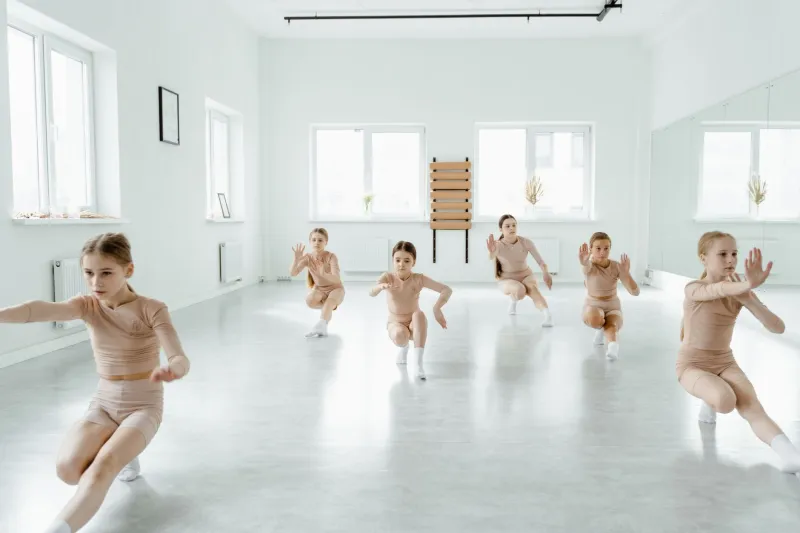
There is a particular silence that settles over a studio after everyone else has left. The mirrors hold the last positions. The floor still carries the warmth of effort. For most dancers, that silence is simply the end of rehearsal—a threshold between the work and the world. For a distinct and quietly growing cohort of American choreographers, that silence is the point.
These are artists who build work with no intention of offering it outward. No venue booking, no ticket sales, no documentation team positioned in the wings. In some cases, not even a formal audience. The piece exists in the room where it was made, for the duration it was made, and then it is gone. What remains is only what the body carries forward—memory, transformation, residue.
This is not artistic timidity. It is, by any honest measure, one of the more confrontational stances available to a contemporary performer.
Against the Archive
American creative culture has spent the better part of a decade reorganizing itself around the logic of capture. The assumption that work without documentation is work without consequence has seeped into almost every creative discipline, and dance has not been immune. Platforms reward visibility. Grants increasingly require evidence of reach. Even within the concert dance world, the pressure to record, to stream, to distribute has reshaped how choreographers think about what a piece is supposed to become.
Into this environment, the choice to make work that cannot be replayed reads less like a stylistic preference and more like a philosophical declaration. It insists that the value of a performance is not located in its reproducibility. It places the meaning squarely in the encounter—in the specific convergence of a particular body, a particular room, and a particular moment that will not be reconstructed.
The art historian and critic Lucy Lippard once described the dematerialization of the art object as an attempt to resist the commodification of creative work. What these choreographers are pursuing might be understood as dematerialization taken a step further: the refusal not just of the object, but of the record.
The Room as Co-Creator
What becomes possible when the audience is stripped away—or reduced to one or two witnesses invited into a genuinely private space—is a reconfiguration of the relationship between dancer and environment. Without the obligation to project, to communicate across distance, to manage legibility for an unfamiliar eye, the body is free to operate at a different register entirely.
Practitioners working in this vein frequently describe the studio space itself as an active participant. The acoustic qualities of a particular room, the quality of afternoon light through a specific window, the texture of a worn wooden floor—these stop being incidental and become compositional. When the work is not being prepared for translation into another context, the context itself becomes inseparable from the work.
This is, in its own way, a form of site-specificity that operates at an intimate rather than a monumental scale. Where much site-specific performance asks how the body can animate a public space, these artists are asking what a private space asks of the body when no one is watching to confirm the answer.
Witnessing Without Recording
Not all of this work is entirely solitary. Some choreographers do invite witnesses—but the terms of witness are carefully constructed. Attendees may be asked not to photograph, not to describe the work publicly, occasionally even to refrain from discussing it afterward. The witness is present not to carry the work outward but to complete a circuit that the work requires in order to be fully itself.
This arrangement challenges the conventional understanding of what an audience does. In most performance contexts, the audience is implicitly a conduit: they receive the work, they respond to it, and through word of mouth or critical review or social sharing, they extend the work's life beyond the room. Here, the audience is asked to be a terminus. The experience ends with them. Their memory is the only archive.
There is something both demanding and deeply generous in this arrangement. It asks a great deal of trust—that the witness will take the encounter seriously, that they will honor its privacy, that they understand they are being offered something that will not be offered again in precisely this form. In return, the artist offers an experience of unusual intensity. Stripped of the mediation that documentation introduces, the encounter between performer and witness becomes almost uncomfortably direct.
What Documentation Costs
It would be easy to frame this practice as simply nostalgic—a romanticization of the pre-digital, a retreat from the realities of how contemporary culture circulates. That reading underestimates what is actually at stake.
Documentation is not a neutral act. The presence of a camera changes what a performer does with their body, however subtly. It introduces a second audience—the future viewer—whose hypothetical presence shapes decisions in real time. Edges get sharpened. Certain kinds of interior work, the kind that does not read well across a screen, get quietly abandoned. Over time, the accumulated effect of performing for the record can reshape an artist's entire movement vocabulary, calibrating it toward what survives the compression of video rather than what lives most fully in the room.
Choosing to work without that pressure is not a rejection of craft. It may, in fact, be a defense of it.
Ink on the Body, Not the Page
What connects this practice to the broader conversation that Ink & Dance has long sought to hold is the question of where creative meaning actually resides. The site's founding premise—that movement and mark-making are not separate disciplines but expressions of the same underlying impulse—finds an unexpected echo in the work of dancers who refuse to leave a mark at all.
If the sketchbook and the studio floor are both surfaces on which an artist thinks, then the decision to let that thinking remain private is a statement about the nature of creative inscription. Some marks are made to be seen. Others are made to change the hand that holds the pen. The dance that disappears when the studio empties may leave no trace on a canvas or a camera roll, but it leaves a trace on the body that made it—and on the body, if there was one, that witnessed it.
That trace is real. It simply refuses to be archived.
The Argument the Empty Room Makes
The artists working in this way are not, by and large, making grand public statements about it. The work's privacy tends to extend to its own promotion. What reaches the broader conversation comes largely through the accounts of those who have been invited in—former students, trusted colleagues, the occasional critic who has been asked to leave their notebook at the door.
But the argument the work makes is legible even in its absence. In a culture that treats visibility as the primary metric of value, the deliberate refusal of visibility is itself a form of commentary. It asks who decides what counts as a performance. It asks whether an experience shared by two people in a locked studio on a Tuesday afternoon is less real than one streamed to thousands. It asks, with considerable patience, whether reach and meaning are actually the same thing.
The empty room, it turns out, has quite a lot to say.