Breathing the Studio In: How Olfactory Experience Is Opening New Frontiers in Choreographic Practice
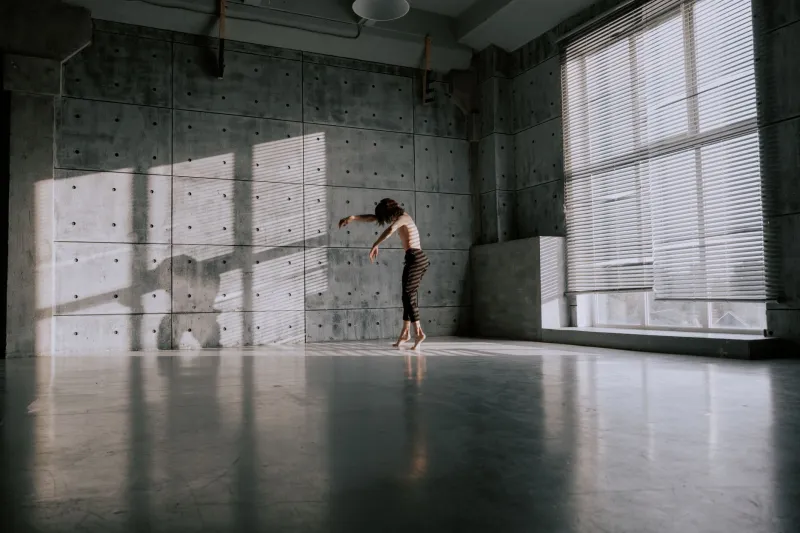
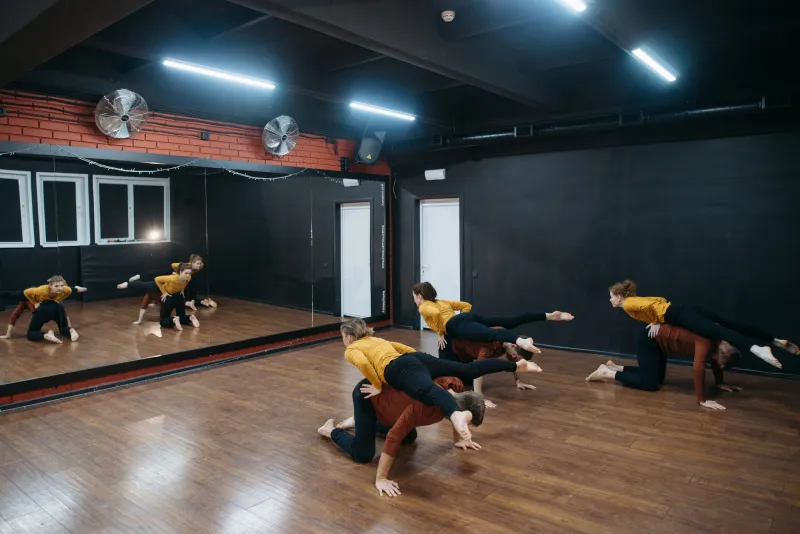
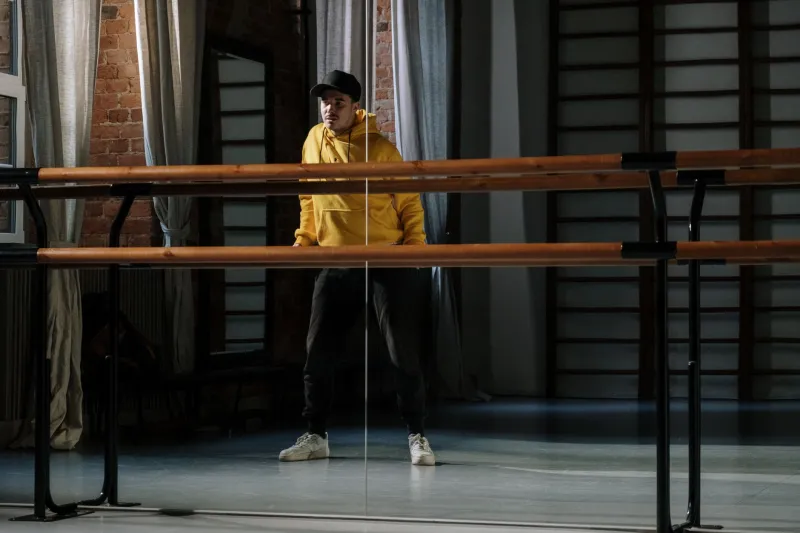
The rehearsal studio has its own particular grammar. Worn sprung floors carry the memory of a thousand weight shifts. Mirrors hold the ghost of every correction ever issued. And then there is the smell — the mineral sharpness of rosin, the warm lanolin of wool stretched over a barre, the faint sweetness of sawdust swept into corners. For most dancers, these sensory details register as atmosphere, the unremarkable backdrop against which the real work unfolds. For a smaller, quietly radical group of practitioners, however, those same scents are not backdrop at all. They are the score.
Across the United States, a number of contemporary choreographers and performers are deliberately constructing their rehearsal environments around olfactory cues, using specific scents to unlock distinct movement vocabularies and to navigate creative territories that visual or auditory prompts alone cannot reach. Their practice sits at the intersection of neuroscience, somatic inquiry, and artistic experimentation — and it is beginning to attract serious attention from researchers and presenters alike.
What the Nose Knows
The scientific foundation beneath this work is more substantial than it might initially appear. The olfactory system is, neurologically speaking, the most direct sensory pathway to the brain's limbic region — the seat of emotional memory and embodied association. Unlike sight or sound, which travel through relay stations before reaching higher cortical centers, scent signals arrive at the amygdala and hippocampus almost immediately. The result is a form of recall that bypasses conscious narration entirely, surfacing memories and physical states with an immediacy that other senses rarely match.
For dancers trained in somatic practices — approaches that prioritize internal sensation over external form — this directness is precisely the point. When the nervous system is already primed toward interoceptive awareness, an olfactory trigger can function like a key turning in a lock, releasing physical responses that years of mirror-based training might actually suppress. Several movement researchers have noted that olfactory stimuli can initiate spontaneous postural shifts, alter breathing patterns, and modulate muscle tone in ways that are difficult to achieve through verbal instruction alone.
The phenomenon has a clinical name when it presents in its most pronounced form: olfactory-kinesthetic synesthesia. In its classical definition, synesthesia describes a neurological condition in which stimulation of one sense automatically and involuntarily triggers an experience in another. For olfactory-kinesthetic synesthetes, a particular smell does not merely evoke a memory of movement — it produces a felt impulse to move, sometimes accompanied by specific spatial directions, rhythmic qualities, or dynamic intensities.
Scent as Score
New York-based choreographer and somatic educator Mara Delacroix — who has worked with companies across the Northeast and regularly teaches at independent studios in Brooklyn — describes her first deliberate use of scent in a rehearsal as accidental. She had been struggling for weeks with a duet that required two performers to negotiate proximity without the vocabulary feeling clinical or imposed. On a whim, she diffused cedar oil in the studio before a session.
"Something shifted within the first ten minutes," she recalls. "The performers started making choices about distance and contact that I had been trying to coach verbally for a month. The cedar seemed to give them permission to settle into their own weight. I stopped talking and just watched."
Delacroix has since developed a systematic approach she calls olfactory scoring — a method in which specific scents are assigned to specific movement qualities or relational dynamics within a piece. Citrus compounds, she has found, tend to produce upward and outward impulses in her collaborators. Earthy base notes — vetiver, patchouli, aged wood — draw movement downward and inward. Floral middle notes introduce a quality of suspension that she describes as "the body caught between two decisions."
She is careful to note that none of this is prescriptive. The scents do not dictate choreography. They prepare the nervous system to receive choreographic possibility with less interference from habitual patterns.
The Architecture of the Rehearsal Room
For other practitioners, the intervention is less systematic and more environmental. Chicago-based performer and installation artist Theo Barrantes has spent the past three years designing what he calls "scented rehearsal architectures" — spaces in which different areas of the studio carry different olfactory signatures, effectively dividing the floor into zones of distinct sensory character.
In one recent project, Barrantes used unfinished pine planks along one wall to introduce a raw, resinous quality to a corner of the space, while burning beeswax candles at the opposite end to create a warmer, denser atmosphere. Performers moved freely between these zones during improvisation sessions, and Barrantes documented the qualitative shifts in their movement as they crossed invisible olfactory thresholds.
"What I noticed was that the transitions were as interesting as the zones themselves," he says. "The moment a dancer moved from one scent environment into another, there was often a beat of genuine uncertainty — a pause that wasn't about technique. It was the body recalibrating. That pause became some of the most alive material in the whole process."
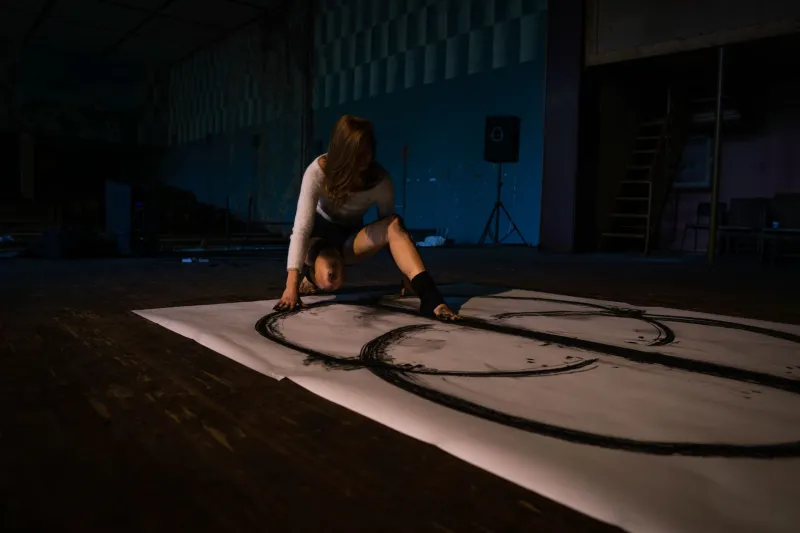
Barrantes's work blurs the boundary between choreographic process and installation art in ways that feel entirely consistent with the Ink & Dance ethos — movement and the constructed environment engaging in an ongoing, reciprocal conversation rather than one serving merely as the context for the other.
Challenging the Hierarchy of the Senses
What unites these practitioners, despite their different methodologies, is a shared resistance to the assumption that dance is fundamentally a visual and auditory form. That assumption is so deeply embedded in American concert dance culture — in the primacy of the mirror, the lighting rig, the sound system — that questioning it can feel almost transgressive. The stage, after all, is designed to be seen and heard. Smell is the sense that architecture does not accommodate.
And yet the body, as these artists insist, does not experience itself through vision and sound alone. Proprioception, interoception, and olfaction together constitute a rich inner landscape that conventional choreographic training rarely addresses directly. By bringing scent into the studio as a deliberate creative tool, these dancers are not merely adding a sensory novelty to their process. They are reorienting the entire axis of attention — from the external to the internal, from the image to the impulse.
There is something quietly radical in that reorientation. It suggests that the most interesting choreographic territory may not be visible at all, that the score worth following might be written not in notation or in the air between bodies, but in the invisible chemistry of a room breathing alongside its inhabitants.
A Practice Still Finding Its Language
It would be premature to claim that olfactory-kinesthetic practice constitutes a movement — its practitioners are few, its methods highly individualized, and its documentation remains sparse. What exists is something more modest and perhaps more honest: a set of artists working at the edge of what dance has traditionally been permitted to be, using the most ancient of the senses to ask new questions of a very old art form.
For audiences accustomed to receiving dance through their eyes, encountering this work can require a genuine recalibration. But that, arguably, is the point. The studio has always held its particular smell. These artists are simply insisting, at last, that we follow it somewhere.