From Studio Floor to Gallery Wall: When Dance Notation Becomes the Art Itself
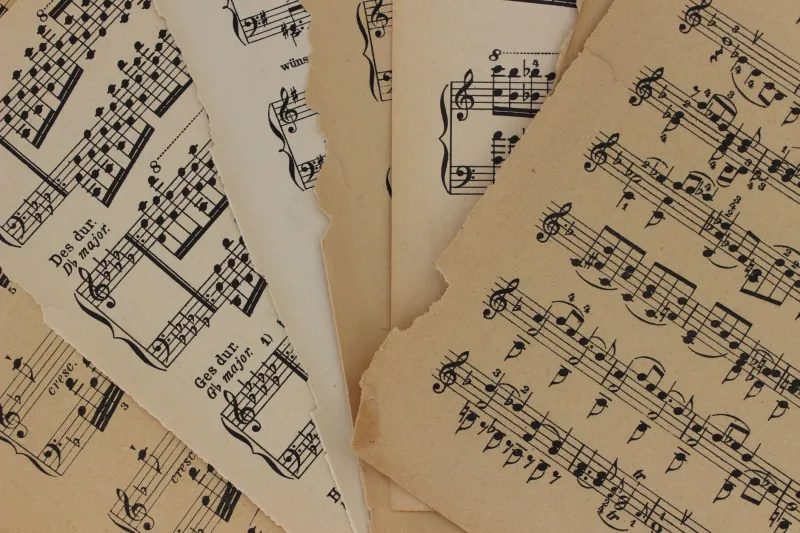
There is a particular kind of beauty in a document that was never meant to be beautiful. A handwritten Labanotation score — its vertical staff crowded with directional symbols, level indicators, and timing columns — was designed, first and foremost, to be read by a body rather than admired by an eye. Yet increasingly, these same documents are appearing beneath gallery lighting, framed behind archival glass, positioned alongside paintings and prints as though they always belonged there.
The conversation about movement notation as visual art is not entirely new, but it has reached a new urgency. A growing cohort of American choreographers, curators, and dance scholars is making a deliberate and sustained case that notation systems deserve reconsideration — not as supplementary records, but as primary artistic statements.
The Document That Outlived Its Function
Labanotation, developed by Rudolf Laban in the early twentieth century and codified through the Dance Notation Bureau in New York City, has long been the dominant written language of Western concert dance. Its vertical staff reads from bottom to top, mirroring the temporal unfolding of movement through space. For decades, the Bureau's archives in Manhattan have housed thousands of these scores — works notated for preservation purposes, filed away and rarely seen outside academic or rehearsal contexts.
What has changed is the willingness to pull those documents out of the filing cabinet and ask a different set of questions about them. When a Labanotation score for a mid-century American modern dance work is placed on a gallery wall, viewers who cannot read the system encounter something visually arresting: columns of geometric symbols, shading gradients that indicate weight and energy, the rhythmic pulse of timing marks running like a spine through the composition. The notation does not become illegible — it becomes, paradoxically, more visible.
"There's a real difference between looking at a score and reading it," said one notation specialist affiliated with the Dance Notation Bureau. "Most gallery visitors will never learn to read Labanotation. But they can see it. And what they see is genuinely complex and visually coherent in ways that reward sustained attention."
The Younger Generation Blurs the Line Deliberately
If the archival case rests on rediscovering existing documents, a younger generation of choreographers is taking a more proactive stance — creating notation systems that are designed from the outset to function simultaneously as instruction and as image.
Across American dance studios and MFA programs, artists are developing what some have begun calling "aesthetic scores": notation frameworks that retain functional utility — a trained collaborator could, in theory, reconstruct movement from them — while also operating as self-sufficient visual compositions. These works often borrow the visual grammar of abstract drawing, architectural drafting, or information design, producing objects that sit comfortably in both a rehearsal room and a contemporary art context.
One New York-based choreographer, whose grid-based notation system has been exhibited at two Brooklyn galleries in the past three years, describes the dual ambition plainly. "I want the score to teach a dancer something about the work. But I also want it to hold its own in a room with paintings. Those aren't competing goals. They're the same goal approached from different directions."
The grid structures these artists favor are particularly striking. Unlike the vertical staff of Labanotation, grid-based systems spread movement information across a two-dimensional field, creating visual textures that recall minimalist painting or architectural elevation drawings. Color, density, and negative space become carriers of choreographic meaning — and, simultaneously, compositional choices in their own right.
What Curators Are Beginning to Understand
The curatorial community has been cautious but increasingly engaged. Several American institutions — among them dance-focused organizations that have expanded into gallery programming and contemporary art museums with performance-oriented curatorial departments — have begun incorporating notation works into group exhibitions that address the body, time, and documentation.
The challenge for curators is one of framing. A Labanotation score exhibited without context risks being read as mere artifact — interesting for its historical associations but not for its intrinsic visual qualities. The more compelling exhibitions have been those that resist the archival framing entirely, positioning notation works in dialogue with abstract drawing or conceptual art rather than with dance history proper.
"The question we kept returning to was: what does this object do to a viewer who has no relationship to dance?" noted one curator involved in a recent group show that included both Labanotation documents and contemporary choreographic scores. "And the answer, consistently, was that it did quite a lot. People spent time with these works. They found entry points. That's what you want from anything on the wall."
The institutional stakes are not trivial. If notation works are accepted into the canon of visual art — even provisionally, even within niche exhibition contexts — the implications for how American museums approach the documentation of performance are considerable. It would suggest that the record of a dance is not merely a secondary object but a primary one, worthy of acquisition, conservation, and display on its own terms.
Instruction Manual as Aesthetic Object
There is a broader cultural context worth acknowledging here. American audiences have grown increasingly comfortable with the idea that functional objects can carry aesthetic weight — that a well-designed data visualization, an architect's working drawing, or a hand-lettered recipe can be experienced as something more than purely utilitarian. The rise of design culture, the mainstreaming of graphic arts, and the sustained influence of conceptual art have all contributed to a perceptual environment in which the line between tool and artwork is genuinely negotiable.
Dance notation arrives into that environment with particular force, because what it encodes — living human movement, the most ephemeral of all artistic materials — is precisely what static visual art cannot contain. The score does not reproduce the dance. It translates it into a different register entirely, one that is permanent and spatial where the dance itself was transient and temporal. That translation is, in itself, an act of imagination. And imagination, most artists and critics would agree, is where art begins.
The choreographers and curators driving this conversation are not arguing that every notation document deserves a place in a museum collection. They are arguing for something more modest and more consequential: that the category of visual art is capacious enough to include objects that were made to be used, provided those objects also reward the kind of sustained, disinterested looking that aesthetic experience requires.
On that measure, the more striking examples of both archival Labanotation and contemporary choreographic scores make a persuasive case. They ask the eye to work. They offer structure and mystery in equal measure. They document something that cannot be fully documented, and in doing so, they become something that cannot be fully explained.
That, perhaps, is the most reliable definition of art that the field has ever managed to produce.