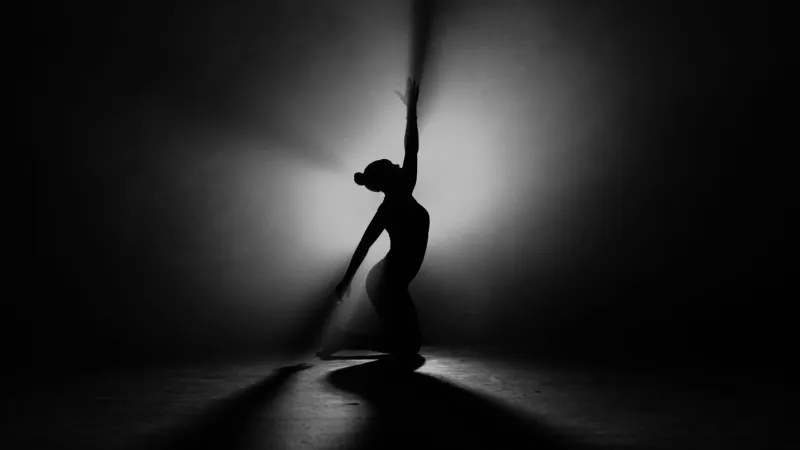
Needle, Thread, and Intention: The Dancers Designing Their Own Artistic Skin
For much of the twentieth century, the relationship between a dancer and their costume was largely transactional. A choreographer envisioned a movement vocabulary, a costume designer interpreted that vision in fabric and silhouette, and the dancer — the living architecture through which everything was ultimately expressed — wore what they were given. The body was the canvas, but someone else was always choosing the paint.
That arrangement is quietly, and in some corners quite loudly, coming undone.
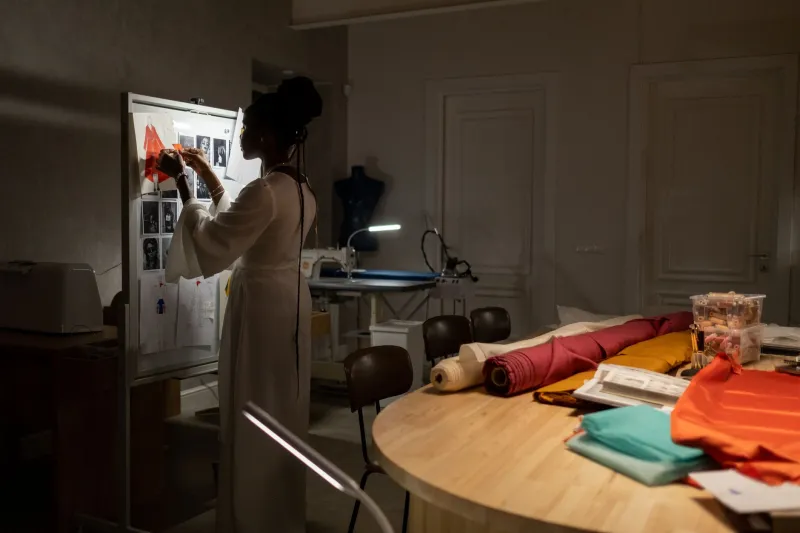
Across the United States, from Brooklyn loft studios to converted warehouses in Los Angeles and Chicago's Pilsen neighborhood, a distinct movement is taking shape. Contemporary dancers are teaching themselves to sew, screen-print, dye, and construct. They are sourcing deadstock fabric from Garment District remnants and thrift store racks. They are collaborating with textile artists, enrolling in evening fashion courses, and, in doing so, refusing the long-standing division of labor that once separated what a body does from what a body wears.
The Costume as Choreographic Statement
The distinction between costume and clothing has always been a matter of intention. A leotard worn in rehearsal is functional. That same leotard, hand-dyed in gradients that respond to stage lighting and cut asymmetrically to emphasize the arc of a lifted arm, becomes something else entirely — an argument made in fabric before a single step is taken.
This is precisely the logic animating dancers who have moved into textile creation. When the performer designs their own garment, every seam becomes a choreographic decision. The weight of a skirt determines how a turn resolves. The placement of a neckline directs an audience's eye toward or away from the face during moments of stillness. These are not incidental choices. They are compositional ones, and dancers who have spent years learning to command space with their bodies are increasingly insisting on commanding the visual language of what covers those bodies as well.
Several choreographers working in the contemporary American independent dance scene have described the traditional costume design process as one that, however collaborative in intention, frequently produces garments that serve a director's vision of the work rather than the dancer's experience of it. The body in motion feels things a seated designer cannot fully anticipate — the drag of a hem, the constriction of a bodice at full extension, the way synthetic fabric traps heat during a forty-minute piece performed under theatrical lighting. Dancers who design their own costumes bring an embodied knowledge to the process that no external collaborator, however skilled, can entirely replicate.
Autonomy at the Cutting Table
The DIY impulse in American dance is not new — it has roots in the postmodern experiments of the Judson Dance Theater in 1960s New York, where pedestrian clothing became a deliberate aesthetic and political choice. What distinguishes the current moment is the sophistication of the craft being employed and the explicit framing of that craft as artistic practice rather than mere necessity.
Dancers today are not simply making do without a costume budget. Many are investing in their textile education with the same seriousness they bring to technique. They are studying natural dyeing processes, experimenting with heat-reactive materials, and exploring the structural vocabulary of sculptural fashion — the kind of work associated with designers such as Issey Miyake or Iris van Herpen — and translating those principles into garments built to survive the physical demands of performance.
The result is work that exists simultaneously in two artistic registers. A garment constructed by a dancer-designer functions as wearable art in the tradition of the fiber arts and fashion-as-sculpture, and as performance costume in the tradition of theatrical design. Neither category fully contains it, which is, for many of its creators, entirely the point.
The Body as Integrated Artistic System
There is a philosophical dimension to this movement that deserves careful attention. When a dancer designs, constructs, and performs in their own garment, the separation between maker and medium collapses. The body is no longer simply the instrument through which artistic ideas are communicated — it becomes the site where multiple creative disciplines converge and are made indistinguishable from one another.
This integration resonates with the broader cultural conversation happening across American arts institutions about interdisciplinary practice and the arbitrary nature of medium-specific categories. Galleries are increasingly exhibiting work that refuses to be classified. Performance art, textile installation, and live dance occupy the same room, often the same body. The dancer-designer is not an anomaly within this landscape. They are one of its clearest expressions.
The reclamation of the costume as a personal creative domain also carries an unmistakable message about professional autonomy. In an industry where dancers have historically occupied a position closer to instrument than author — their labor essential, their interpretive voice frequently subordinated to directorial vision — the act of designing one's own performance skin is an assertion of creative sovereignty. It says, with some force: this body, and everything that adorns it, belongs to me.
Where the Ink Meets the Fabric
The connection to visual art practice in this movement is neither metaphorical nor incidental. Dancers who have taken up textile work frequently describe the process in terms that echo the language of painters and printmakers. The fabric is a surface. The dye or paint is a medium. The body wearing the finished piece is both the final layer of the composition and the force that animates it.
This language is worth taking seriously. It suggests that what these dancer-designers are producing is not merely functional apparel with artistic ambitions, but a genuinely hybrid form — one that asks audiences to receive a performance as they might receive a painting, attending to surface and texture and color as primary carriers of meaning, even as the work also demands to be understood as movement, as time-based art, as dance.
For a platform committed to the space where movement meets the canvas, there is something clarifying about this development. The canvas, it turns out, was always the body. What changes when dancers begin to paint it themselves is not the fundamental nature of the form, but the completeness of the artist's control over every element within it.
The Seam Holds
It would be premature to describe the dancer-as-designer movement as a wholesale transformation of American performance culture. Institutional companies with established design departments are not, by and large, dismantling those structures. The Broadway costume shop and the regional ballet wardrobe department remain intact.
But in the independent and contemporary dance world — the sector that has historically generated the ideas that eventually reshape the larger field — something is shifting. The dancer who arrives at a residency with a duffel bag containing both pointe shoes and a portable sewing machine is no longer an eccentric outlier. They are, increasingly, a recognizable type: the complete artist, unwilling to cede any dimension of their work to a process they cannot fully inhabit.
The seam between fashion and choreography, between textile art and performance, is holding — but it is holding something new inside it. And the hands that stitched it shut belong to the dancer.