Drawn to Move: The Choreographers Reclaiming the Sketchbook as a Living Score

There is something quietly radical about watching a choreographer reach for a pencil.
In an era defined by instant video capture — where a dancer's phone can document an entire rehearsal in a matter of seconds — the deliberate act of drawing movement onto paper feels almost countercultural. Yet across American dance studios, from the experimental lofts of Brooklyn to the university programs of the Pacific Northwest, a meaningful number of choreographers are doing precisely that. They are turning away from the screen and back toward the sketchbook, reviving and reinventing hand-drawn notation systems as primary tools for capturing, preserving, and reimagining their work.
This is not nostalgia. It is, by most accounts, a considered artistic and philosophical choice — one that sits at the very intersection of visual art and performance that defines this publication's reason for existing.
The Limits of the Lens
Video documentation has long been the default archive of contemporary dance. It is immediate, accessible, and seemingly objective. A recording captures what happened. But choreographers who have spent years working with footage are increasingly candid about its limitations.
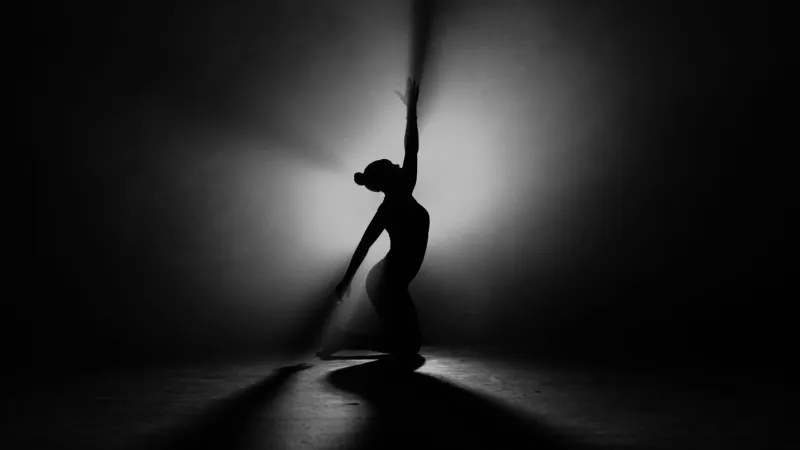
Video flattens space. It privileges a single vantage point, compresses depth, and renders invisible the interior qualities of movement — the intention behind a gesture, the weight distribution within a step, the relationship between a dancer's breath and a shift in direction. Watching a recording of a dance is, in many respects, watching a shadow of it.
Hand-drawn notation, by contrast, demands interpretation at the moment of inscription. The choreographer must decide what matters. That decision is itself a creative act, and the resulting image carries meaning that a video frame, however high-resolution, does not.
"When I draw a phrase, I'm already editing," one New York-based choreographer explained during a recent studio conversation. "I'm asking myself what this movement actually is, not just what it looks like from one angle at one moment in time. That's a completely different relationship to the work."
A History Written in Symbols
The impulse to notate movement is ancient, but the modern systems most American choreographers encounter trace their lineage to the early twentieth century. Rudolf Laban's Labanotation, developed in the 1920s, remains the most widely taught formal system in the United States, used by institutions including the Dance Notation Bureau in New York City to preserve major works in the American repertoire. Benesh Movement Notation, originating in British ballet circles, offers a staff-based approach more familiar to musicians.
Both systems are rigorous, comprehensive, and demanding — requiring years of specialized study before a practitioner can read or write them fluently. This has historically limited their use to institutional settings, leaving the broader field of independent choreography without a widely shared notational language.
What is happening now is something different. Rather than adopting existing systems wholesale, many contemporary choreographers are developing personal visual vocabularies — hybrid languages that borrow selectively from formal notation, drawing, graphic design, and even cartography. The result is a proliferation of idiosyncratic sketchbooks that function less as universal scores and more as intimate artistic documents.
The Sketchbook as Creative Partner
For the choreographers invested in this practice, the sketchbook is not merely a record of work already made. It is an active participant in the making of it.
Drawing a movement sequence before setting it in the studio forces a kind of spatial and conceptual thinking that video review does not encourage. Choreographers describe sketching as a mode of problem-solving — a way of testing the logic of a phrase, identifying structural weaknesses, and discovering possibilities that might never emerge from watching footage alone.
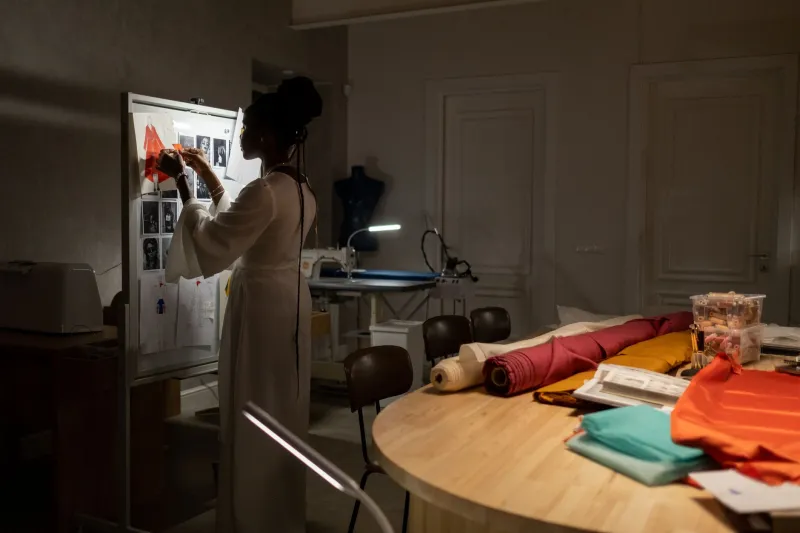
This is the territory where dance and visual art most productively collide. The sketchbook of a choreographer engaged in this practice begins to resemble the working notebooks of painters or architects: dense with arrows, cross-outs, marginal annotations, and small drawings that capture not the final form of an idea but its metabolism — the process by which it grew and changed.
Some choreographers have begun exhibiting these notebooks alongside or in place of video documentation, treating the drawn score as a finished work in its own right. Several recent gallery shows in cities including Chicago and Los Angeles have featured choreographic sketchbooks under gallery lighting, framed and mounted, asking viewers to engage with dance as a visual language even in the absence of a moving body.
What Is Gained, What Is Lost
The revival of hand-drawn notation is not without its complications, and the choreographers engaged in it are generally honest about the trade-offs involved.
Personal notation systems are, by definition, difficult to share. A sketchbook legible to its creator may be opaque to a dancer attempting to reconstruct the work years later. The universality that formal systems like Labanotation aspire to — however imperfectly achieved — is largely absent from these idiosyncratic visual languages. Preservation, in any meaningful archival sense, requires either extensive supplementary documentation or a sustained relationship between the choreographer and the performers who must interpret the drawings.
There is also the question of access. Video is democratic in a way that notation, hand-drawn or otherwise, is not. A recording can be shared instantly, viewed on any device, studied by a dancer in Minneapolis who has never met the choreographer in question. A sketchbook travels differently — slowly, selectively, with friction.
And yet that friction, many practitioners argue, is precisely the point. The difficulty of transmitting a drawn score is not a flaw in the system. It is a feature — one that insists on human mediation, on the passage of knowledge through conversation and physical demonstration rather than passive screen viewing.
"I want there to be a conversation," another choreographer working in this vein noted. "I want someone to have to sit with me and ask what I meant. That's how the work stays alive. A video can be watched alone in the dark. A notation requires a relationship."
Ink and the Body
At its deepest level, the turn toward hand-drawn notation reflects a broader hunger within American dance for forms of documentation that honor the complexity of embodied knowledge. Dance is, at its core, a practice that resists full capture — it exists in the moment of its execution and lives on most fully in the bodies that have danced it. Every attempt to preserve it is, in some sense, a translation.
Video offers one kind of translation. Notation offers another. Neither is complete. Both carry the fingerprints of their maker and the assumptions of their medium.
What the choreographers working with sketchbooks are insisting upon is that the act of translation matters — that the choice of medium is itself an artistic statement. To draw movement is to claim kinship with the long history of visual art, to place dance in conversation with painting and draftsmanship and graphic representation. It is to say that the body in motion and the mark on paper are not opposites but cousins, each capable of illuminating the other.
In a cultural moment that often treats documentation as a neutral, technical act, that insistence feels genuinely important. The sketchbook, it turns out, is not a step backward from the camera. It is a step sideways — into a different kind of seeing, and a different kind of remembering.