Dancing Alone, Building Everything: The Rise of the Independent Artist-Entrepreneur
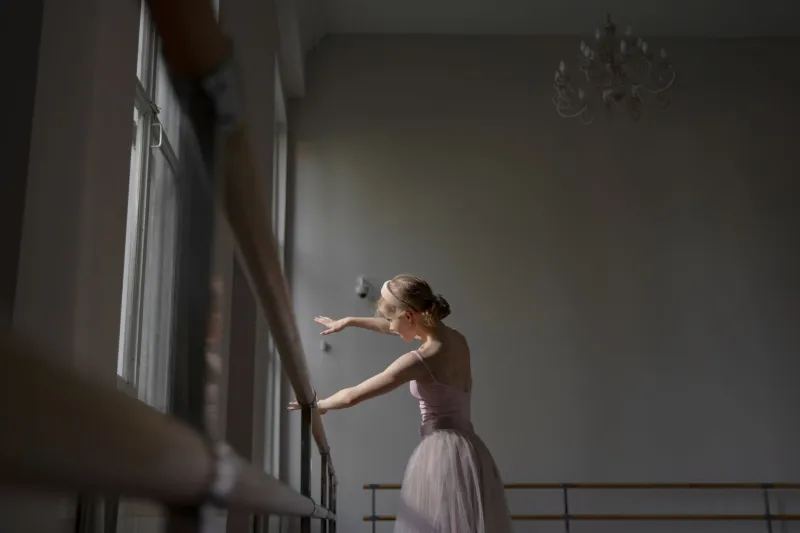
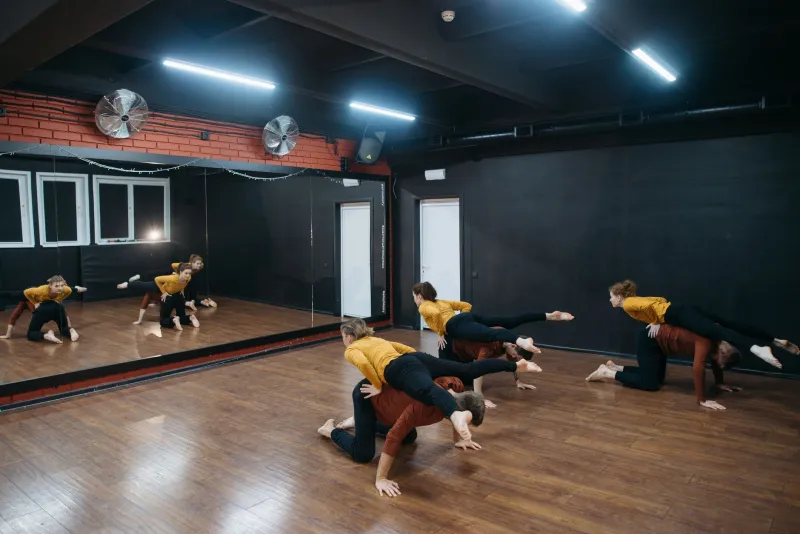
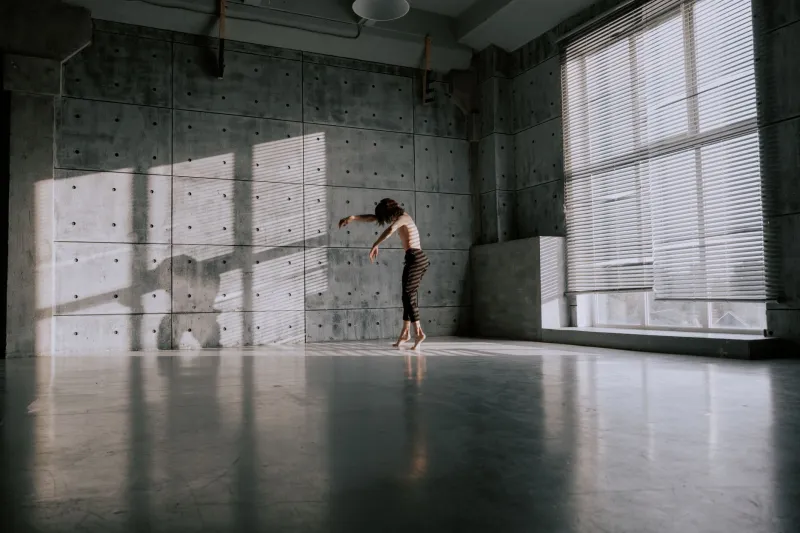
There is a particular kind of quiet that settles over a rented rehearsal studio at seven in the morning—before the mirrors have warmed with reflected light, before the floor has absorbed the day's first footfall. For a growing number of American dancers, that quiet is not lonely. It is the sound of possibility.
Across cities from Portland, Oregon, to Philadelphia, Pennsylvania, a distinct generation of choreographer-performers is abandoning the institutional scaffolding that once defined a dance career. They are not waiting for a company to cast them, nor for a festival to commission them. They are building everything themselves: the work, the audience, the revenue stream, and the identity that holds it all together.
The results are uneven, occasionally precarious, and, by many accounts, artistically alive in ways that institutional structures rarely permit.
Beyond the Audition Room
For much of the twentieth century, a dance career followed a recognizable arc. Conservatory training led to auditions, auditions led to company placement, and company placement determined what work a dancer made—or, more precisely, what work was made upon them. The choreographer and the performer were rarely the same person, and the business of sustaining a career was largely someone else's concern.
That model has not disappeared, but its authority has weakened considerably. Funding cuts to regional dance companies, the contraction of presenter networks, and a broader cultural renegotiation of what institutional belonging means have all contributed to a landscape in which independence is less a romantic choice than a structural reality for many artists.
What distinguishes the current moment is that a significant number of dancers are not merely tolerating that reality—they are designing around it with intention and sophistication.
Miranda Osei, a contemporary dance artist based in Atlanta, Georgia, left her position with a mid-sized regional company in 2021 after six years of performing work she respected but did not author. "I had technique, I had experience, and I had absolutely no idea how to make something that was mine," she says. "Leaving the company felt like stepping off a dock. But I also realized the dock had been keeping me from swimming."
Osei now operates what she calls a "one-person creative enterprise," which encompasses choreographic production, teaching residencies at two Atlanta-area high schools, a small but loyal Patreon subscriber base, and a self-produced annual showing she hosts at a rented black-box space in the city's West End neighborhood. Her income is assembled rather than received, a mosaic of revenue sources that requires constant tending.
The Business of the Body
The administrative dimension of independent dance practice is rarely glamorized, yet it consumes a significant portion of every solo artist's working week. Grant applications, social media management, venue negotiation, tax preparation, and audience development are not peripheral concerns—they are the infrastructure upon which the artistic work depends.
Daniel Ruiz, a New York–based performer and choreographer who trained at the Alvin Ailey American Dance Theater School before striking out independently, describes his weekly schedule with the matter-of-fact precision of someone who has made peace with complexity. "Monday through Wednesday, I'm in the studio. Thursday is administration. Friday I teach. The weekend depends on whether I'm performing or recovering from performing."
Ruiz secured his first substantial grant—a $12,000 award from a New York State arts council program—after three unsuccessful applications. He describes the grant-writing process as a discipline in itself, one that has forced him to articulate his artistic intentions with a clarity that has, paradoxically, sharpened the work. "When you have to explain to a panel why this piece matters, you start asking yourself harder questions," he says. "That rigor shows up on stage."
Other artists are turning to digital platforms with increasing sophistication. Jamila Worthington, a Houston-based dance artist whose practice blends West African movement vocabularies with contemporary performance installation, has built an audience through a combination of Instagram documentation, newsletter writing, and occasional video essays published to YouTube. She is careful to distinguish between promotion and artistic communication. "I'm not selling tickets," she says. "I'm building a community of people who are curious about what I'm doing. When I do perform, they already understand the context. They're not strangers."
Artistic Integrity Under Self-Imposed Pressure
One tension that surfaces repeatedly in conversations with independent dance artists is the relationship between financial necessity and creative autonomy. When the artist is also the administrator, the risk of letting market logic shape artistic decisions is ever-present. Teaching schedules expand to cover rent. Commission inquiries arrive for work that does not quite align with the artist's current inquiry. The pressure to produce new work regularly—to remain visible, to feed algorithms, to satisfy grant reporting requirements—can crowd out the slower, more uncertain processes from which original work grows.
Osei speaks candidly about this dynamic. "There have been months where I've taught fifteen classes and made nothing of my own. And I've had to sit with the question of whether I'm still a choreographer or whether I've become a dance teacher who occasionally choreographs. That distinction matters to me."
Ruiz, for his part, has imposed a structural discipline on his own practice: one new work per year, performed a minimum of three times before he considers it complete. Everything else—teaching, workshops, the occasional commercial project—is in service of that commitment. "The work is the center," he says. "If the center moves, everything falls apart."
What Sustains the Practice
For all its demands, the independent path offers something that company life rarely does: the unmediated relationship between an artist's vision and its realization. There is no artistic director to satisfy, no board to reassure, no season of programming within which a work must fit. The canvas, as it were, belongs entirely to the painter.
Worthington describes the freedom not in abstract terms but in specific ones. "I can make a forty-minute piece about my grandmother's migration from Nigeria to Houston and perform it in a church fellowship hall for eighty people who actually care about that story. No company would commission that. But it's the most important work I've ever made."
That directness—between the artist's interior life and the audience's encounter with it—may be the defining quality of this generation's independent practice. It is messy, impermanent, and often financially fragile. It is also, by almost every account, irreplaceable.
The solopreneur's studio is not a consolation prize. For an increasing number of American dance artists, it is the only room in which the real work can begin.