Dressed to Speak: How Costume Construction Becomes a Silent Choreographic Voice
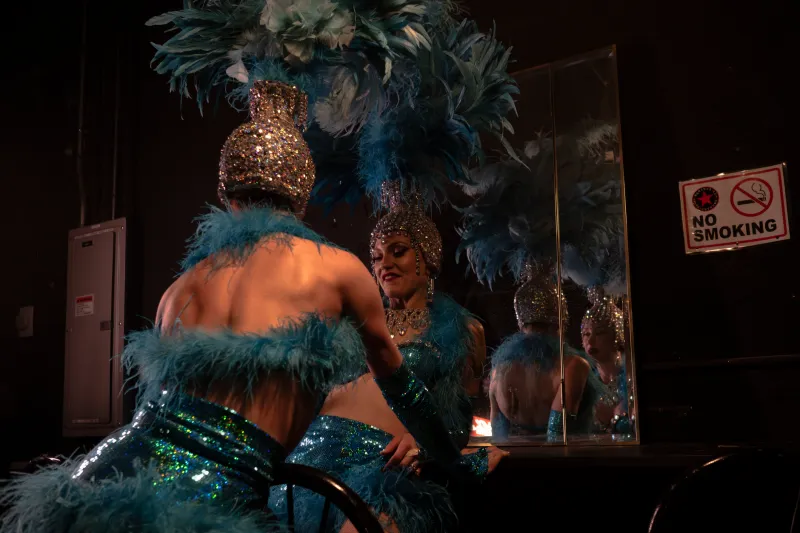
There is a moment, familiar to any seasoned theatergoer, when a dancer enters from the wings and the audience inhales—not because of a dramatic musical cue or a sudden shift in lighting, but because of fabric. The way a garment falls, resists, or billows in that first half-second of appearance communicates something that no program note can fully articulate. It is a language written in silk, cotton, and boning, and it is one of the most deliberately constructed elements of any serious dance production.
Yet costume design remains among the least examined contributors to choreographic meaning. Critics parse footwork and formation. Scholars debate musicality and spatial logic. The garment, meanwhile, does its quiet, indispensable work—shaping perception, redirecting attention, and, in many cases, functioning as an extension of the choreographer's own creative argument.
The Weight of Intention
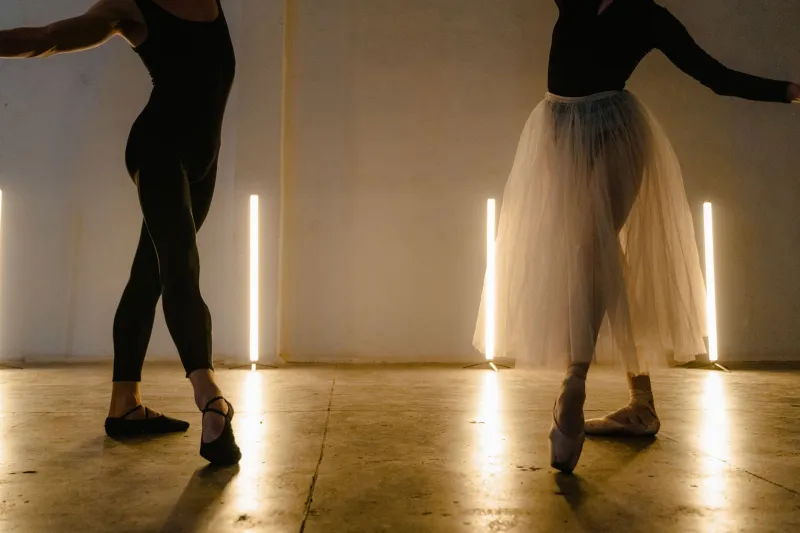
Fabric weight is rarely accidental. A costume designer working with a contemporary dance company will often spend weeks testing materials—draping swatches over moving bodies, watching how different textiles respond to acceleration and stillness. The difference between a skirt constructed from chiffon and one cut from duchess satin is not merely aesthetic. It is temporal. Chiffon continues to move after the body has stopped; satin obeys the body's logic in real time. That distinction, subtle as it sounds, fundamentally alters how an audience reads a phrase of movement.
Choreographers who understand this use it with precision. A solo built around grief, for instance, might be costumed in fabric that lags behind the body—creating a visual echo, a sense that the performer cannot fully escape what trails them. Conversely, a piece exploring freedom or release might employ materials that arrive before the body does, suggesting momentum that exceeds physical capacity.
"We talk about fabric as a second skin, but that undersells it," says one New York-based costume designer who has collaborated with several Bessie Award-winning companies. "Skin doesn't have memory. Fabric does. And that memory is choreographic."
Silhouette as Argument
Beyond weight, silhouette functions as one of costume design's most powerful rhetorical tools. The outline a body presents to an audience carries cultural freight—associations with gender, power, historical period, and social role that activate almost automatically in the viewer's mind. A choreographer who dresses a male dancer in a full skirt is not simply making a fashion statement; they are intervening in a set of assumptions about what that body is permitted to do, and how its movement will be interpreted.
This intervention can be deployed to clarify or to complicate. Some choreographers use silhouette to align the audience's expectations with the movement vocabulary—costuming a technically rigorous ballet piece in structured, classically proportioned garments that reinforce the geometry of the work. Others deliberately destabilize: dressing bodies in silhouettes that contradict the movement, forcing viewers to reconcile what they see with what they expect to see.
The latter strategy has been a defining feature of much American postmodern dance. Companies working in the tradition of Judson Dance Theater frequently used pedestrian clothing to argue that pedestrian movement deserved the same attention as codified technique. The costume was the manifesto, worn on the body.
Revealing and Withholding
Perhaps the most charged decision a costume designer makes is how much of the body to expose—and where. The choice to reveal or conceal specific anatomical regions is never neutral. It directs the audience's gaze, emphasizes or suppresses particular movement qualities, and carries implications about vulnerability, power, and identity.
A bare torso, for example, foregrounds musculature and breath. The audience sees the work of the body in an immediate, almost clinical way. Cover that same torso in a structured jacket and the viewer's attention shifts to the architecture of the arms, the tilt of the head. Neither choice is superior; both are arguments about where meaning lives in the moving body.
Costume designers working with dancers who have non-normative bodies—whether due to disability, age, or body type—speak with particular urgency about this dynamic. "When we make decisions about coverage and exposure, we're deciding what the audience is allowed to see and what story they're going to tell themselves about it," notes one Chicago-based designer whose work has appeared at the Harris Theater. "That's not decoration. That's editorial."
Construction as Constraint and Collaboration
Garment construction—the internal architecture of seams, boning, padding, and interfacing—shapes movement in ways that even experienced dancers sometimes find surprising. A costume that appears fluid from the audience's perspective may be engineered with considerable internal structure, guiding the performer's body into specific positions or subtly restricting ranges of motion.
Some choreographers use this constructive constraint deliberately, treating the costume as a kind of built-in score. The garment tells the dancer where the limits are, and the choreography is developed in dialogue with those limits rather than despite them. This approach demands an unusually collaborative relationship between designer and choreographer—one that begins in the studio long before opening night.
"I've had choreographers call me in during the very first weeks of creation," says a Los Angeles-based designer with credits across contemporary and theatrical dance. "We're not fitting a finished piece into a costume. We're making the piece and the costume at the same time, and each one changes the other."
This collaborative model, still far from universal, represents a meaningful shift in how costume design is positioned within the creative hierarchy of dance-making. Rather than functioning as a downstream service—executing a vision already fully formed—the designer enters as a co-author, contributing to decisions about movement itself.
What the Audience Absorbs Without Knowing
Most audience members will never consciously analyze what a dancer is wearing. They will not clock the weight of the fabric or notice the deliberate asymmetry of a hemline. And yet they will be affected by all of it. The emotional register of a performance, the sense of a character's interiority, the degree to which a body reads as powerful or vulnerable, free or constrained—all of these perceptions are shaped, in part, by the garment.
This is the quiet authority of costume design: it operates below the threshold of conscious attention, doing work that is no less rigorous for being invisible. When a production lands with particular emotional force, when a dancer seems to inhabit a role with unusual completeness, the costume is often part of the reason—even if no one in the house can articulate why.
For those who make the work, that invisibility is not a failure. It is, in many ways, the highest possible compliment. A costume that calls attention to itself has, in some sense, stepped outside the choreography. A costume that disappears into the movement has become part of it—which is precisely where, at its best, it belongs.
The choreographer's closet, it turns out, is not a storage space. It is a drafting room, and everything hanging inside it is already dancing.