Paper and Motion: The Private Visual Diaries Shaping America's Choreographic Imagination
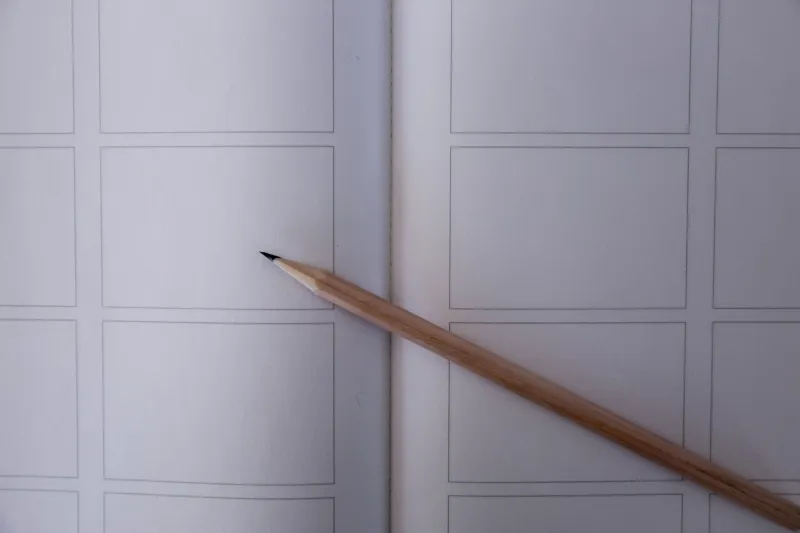
There is a moment in the life of nearly every choreographic work that no audience ever witnesses. It arrives before the rehearsal room is booked, before the dancers are cast, and long before the lighting designer begins plotting angles. It happens at a kitchen table in Brooklyn, or on a coffee-stained desk in a Chicago walk-up, or in the margins of a notebook tucked into a dance bag somewhere between the barre and the subway. It is the moment when movement, which exists only in time and disappears the instant it is completed, is coaxed onto paper.
Across the United States, a growing number of choreographers and performing artists are returning to — or discovering for the first time — the practice of maintaining dedicated visual journals as a central component of their creative process. These are not simple rehearsal notes or technical diagrams. They are layered, often deeply personal documents that combine freehand drawing, collage, invented notation, watercolor washes, cut photographs, handwritten text, and whatever other materials happen to be within reach when an idea refuses to wait.
The result is a body of work that rarely, if ever, reaches public view. And yet, for the artists who maintain these journals, the act of making marks on paper is inseparable from the act of making dances.
The Sketchbook as Thinking Tool
Visual artists have long understood the sketchbook as a space for thinking rather than producing — a place where ideas are tried and abandoned without consequence. For choreographers, adopting this same logic represents something of a conceptual shift. Dance training in the United States has historically emphasized the body as the primary instrument of ideation. You learn by doing, by feeling, by watching yourself and others move through space. The notion that a pencil might serve as a legitimate extension of that process has not always been self-evident.
Yet the appeal is practical as much as philosophical. Movement is, by its nature, fugitive. A phrase developed in Tuesday's rehearsal may be subtly different by Thursday and unrecognizable by the following week, its original shape lost to the iterative pressure of refinement. A visual journal offers a form of resistance to that erasure. When a choreographer sketches a spatial configuration — even crudely, even in a shorthand that only they can decode — they are creating a fixed point against which later decisions can be measured.
This is not the same as formal dance notation systems such as Labanotation or Benesh Movement Notation, which operate according to established and learnable grammars. The visual journals under consideration here are idiosyncratic by design. They belong to no system except the one their maker has invented, and they communicate most fluently with a single reader: the person who drew them.
Collage and the Choreographic Imagination
If drawing serves as a tool for capturing spatial logic, collage has emerged as a particularly fertile method for exploring atmosphere, intention, and emotional register. Several choreographers working in contemporary American dance have described a practice of assembling imagery — torn from magazines, printed from digital archives, gathered from gallery postcards — that speaks to the feeling of a work in progress rather than its literal content.
This approach draws an unmistakable line between the choreographer's studio practice and that of the visual artist, particularly those working in the tradition of assemblage that runs from Joseph Cornell through Romare Bearden and into the present. The choreographer is not copying these artists so much as borrowing their methodology: the belief that juxtaposition creates meaning that neither element could produce alone.
A collage page in a choreographic journal might place an architectural photograph beside a hand-drawn figure beside a swatch of fabric beside a line of poetry. None of these elements describes a step. Together, they describe a world — the sensory and emotional coordinates within which a piece of choreography is meant to exist. For the artist returning to this page before a rehearsal, the collage functions almost as a tuning fork, recalibrating intention when the daily work of teaching steps threatens to obscure the larger vision.
Notation Without a Grammar
Perhaps the most formally inventive aspect of these journals is the notation. Freed from the requirements of a codified system, choreographers have developed extraordinary private vocabularies for transcribing movement onto flat surfaces. Some rely on sequential figure drawings — rough stick figures or more detailed anatomical sketches arranged across a page like frames of film. Others use arrows, curves, and abstract marks that indicate direction, weight, or quality rather than specific positions. Still others incorporate musical staff lines, mapping movement to rhythm in ways that their formal training may not have made available to them.
What these systems share is their resistance to universality. They are not designed to be read by a rehearsal director or reconstructed by a future generation of dancers. Their purpose is more immediate and more intimate: to hold an idea long enough for the choreographer to return to it.
This raises an interesting question about preservation. If these journals are so private, so encoded in personal shorthand, what happens to them? Unlike a video recording or a formally notated score, a visual journal may be effectively illegible to anyone other than its author. For the dance world, which has long grappled with the ephemerality of its own art form, this represents both a familiar challenge and a new dimension of loss.
The Journal as Parallel Artwork
Not every choreographer views their visual journal purely as a functional tool. For some, the journal has begun to assert its own status as an artwork — a parallel creation that exists alongside the performance rather than merely preceding it.
This perspective invites a reconsideration of where choreographic work actually begins and ends. If the journal documents the imaginative labor that precedes the stage work, and if that labor has genuine aesthetic integrity, then the journal is not merely preparation. It is part of the work itself, in the same way that a sculptor's maquette or a filmmaker's storyboard participates in the larger creative act even when it is never publicly exhibited.
A small number of American dance companies and presenting institutions have begun to recognize this, incorporating journal pages into exhibition materials, program notes, and educational outreach. These glimpses into the choreographic interior have proven surprisingly compelling to general audiences, who often have no framework for understanding how a dance is made and who find in these pages an accessible point of entry into a process that can otherwise feel opaque.
Movement Meets the Canvas, Before the Stage
What the visual journal ultimately represents is a commitment to the idea that movement and mark-making are not opposing disciplines but deeply related ones — that the hand reaching for a pencil and the hand reaching for a partner in a duet are performing versions of the same gesture. For a platform like this one, built on the premise that dance and visual art are in constant conversation, the choreographer's sketchbook is not a curiosity. It is evidence.
The pages accumulating in studios and apartments and rehearsal bags across this country constitute an unofficial archive of American dance — one that has never been catalogued, that may never be fully legible, and that continues to grow with every choreographer who reaches for paper when the body alone cannot hold the idea.
That archive deserves our attention. Not because it will answer every question about how dances are made, but because it reminds us that the act of creation leaves traces even when we are not looking — and that those traces, however private, are part of the art.