Unwritten: The Quiet Crisis of Dance's Disappearing Memory
A painting, once completed, simply exists. It hangs on a wall, absorbs light, and waits. A sculptor's work accumulates dust across decades, sometimes centuries, without requiring any additional act of will to survive. The archive, for the visual artist, is almost incidental—a natural consequence of making something that refuses to disappear.
Dance enjoys no such luxury.
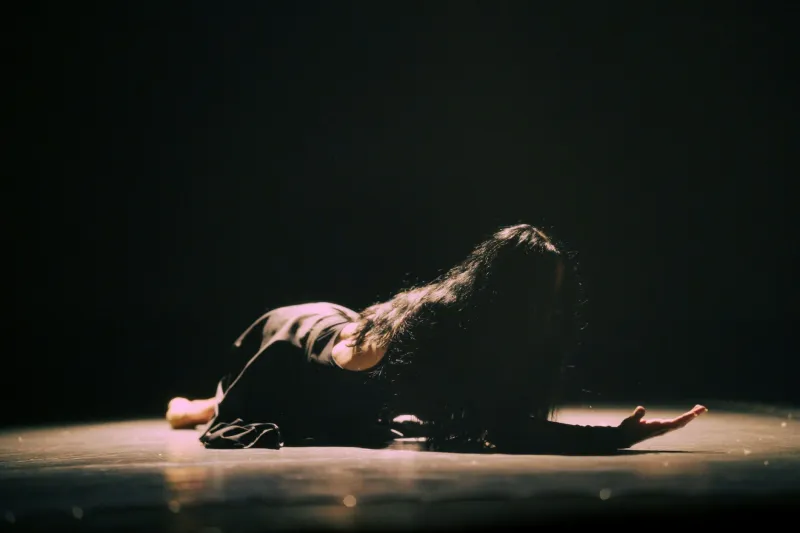
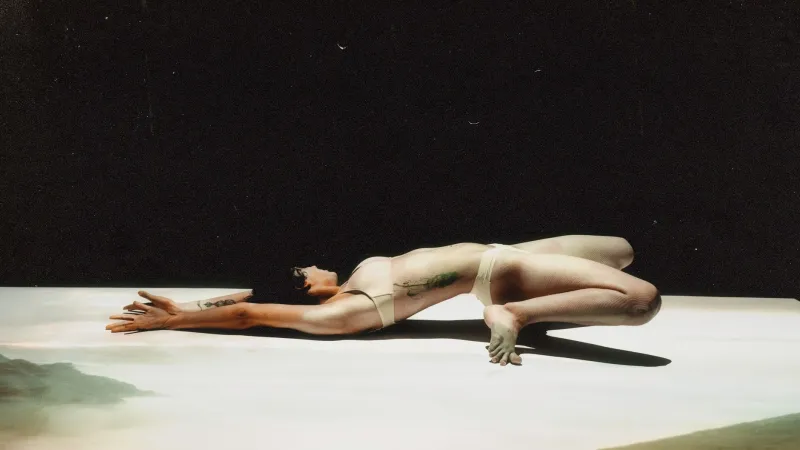
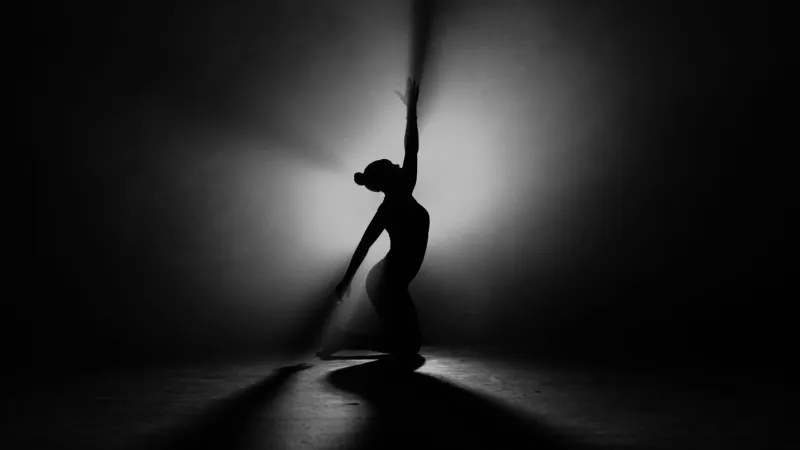
When a choreographer finishes a work and the last performance concludes, the piece does not retire to a storage facility or a climate-controlled vault. It dissolves. What remains are photographs, the occasional video recording, perhaps a few pages of handwritten notes, and the bodies of the dancers who once performed it—bodies that carry memory imperfectly, selectively, and temporarily. The question of why dance has historically resisted its own preservation is not merely logistical. It cuts to the philosophical core of what the art form believes itself to be.
The Archive as Afterthought
Speak with enough choreographers and a consistent thread emerges: the archive was never the point. "We were always taught that the work lives in the room," says one New York–based choreographer who has spent more than two decades creating concert dance. "The idea that you would spend equal energy documenting it felt almost like a betrayal of what made it alive."
This perspective is not uncommon, and it is not without logic. Dance, perhaps more than any other art form, has defined its identity through presence—through the unrepeatable encounter between a moving body and a witnessing audience. To document is, in some sense, to fix what was meant to flow. The camera flattens three dimensions into two. Notation reduces kinetic experience to symbol. Something is always, inevitably, lost.
But critics of this philosophy argue that the resistance to documentation has calcified into something more damaging than philosophical purity. It has become institutional neglect.
"Visual artists don't agonize over whether keeping a sketchbook betrays the finished painting," notes one digital archivist who works with performing arts organizations across the country. "The dance world has confused ephemerality as an aesthetic value with ephemerality as an operational standard. Those are very different things, and conflating them has cost us enormously."
What Labanotation Promised—and Couldn't Deliver
The field has not been entirely without tools. Labanotation, the movement notation system developed in the early twentieth century by Rudolf Laban, offered dance something analogous to musical score: a written language capable of recording the specifics of human movement across time, space, and dynamic quality. In theory, it represented exactly the kind of archival infrastructure that could place dance on equal footing with other disciplines.
In practice, its adoption remained limited. Learning to read and write Labanotation fluently requires years of specialized training, and the number of certified notators in the United States has never scaled to meet the volume of work being created. The Dance Notation Bureau, based in New York, has worked steadily to address this gap, but resources have consistently lagged behind demand.
"The notation scores we do have are invaluable," explains one practitioner affiliated with the Bureau. "They've allowed companies to reconstruct works decades after the original choreographers passed away. But for every score that exists, there are hundreds of pieces that were never notated at all. The archive has enormous holes in it."
Those holes are not randomly distributed. They fall disproportionately along lines of race, gender, and institutional access. Works created by choreographers outside the dominant concert dance establishment—particularly those working in Black vernacular traditions, in community-based settings, or outside major metropolitan centers—have been documented least consistently. The archive, where it exists, reflects the biases of who was considered worth preserving.
The Video Illusion
The widespread availability of video recording technology offered what seemed, for a time, like a straightforward solution. If notation was too specialized and too slow, cameras could capture everything. By the 1980s and 1990s, most professional companies had begun maintaining video libraries of their productions. The problem, it turned out, was not access to the technology but the assumptions that accompanied it.
"People assumed that having a video meant having a record," says one archivist who has spent years working to digitize deteriorating dance footage. "But VHS tapes degrade. Formats become obsolete. Organizations that didn't actively maintain those collections lost them anyway—just on a longer timeline."
Beyond the material fragility of analog formats, there is the deeper question of what video actually captures. A single-camera recording taken from a fixed position in the house communicates relatively little about the spatial relationships, the texture of movement, or the live energy that constituted the work in performance. It is documentation, but it is incomplete documentation—a shadow that can mislead as easily as it illuminates.
Multi-camera recording, motion capture technology, and immersive video formats have begun to address some of these limitations, but they require resources that most dance organizations simply do not have. The Metropolitan Museum of Art's annual operating budget dwarfs that of nearly every dance company in the country. The asymmetry is not accidental.
What the Visual World Understands
The contrast with visual art's archival culture is instructive. Major museums maintain dedicated conservation departments. Artist estates employ professionals to catalog, authenticate, and protect bodies of work. Art history as a discipline has developed robust methodologies for tracking provenance, attribution, and influence across centuries. The infrastructure is vast, well-funded, and treated as a public good.
Dance has no equivalent ecosystem. Academic dance history programs exist, but they are relatively few and often underfunded. The archival work that does happen tends to be driven by individual passion rather than institutional mandate—a single devoted rehearsal director, a choreographer who happened to keep meticulous journals, a graduate student who recognized what was at stake before it was too late.
"The visual art world treats the archive as part of the work," observes one scholar whose research focuses on twentieth-century American concert dance. "Documentation isn't separate from the artistic project—it's continuous with it. Dance hasn't arrived at that understanding broadly, and I think part of the reason is that we've romanticized disappearance."
The Stakes of Forgetting
What is actually lost when a dance work disappears without adequate documentation? The question is worth sitting with seriously. Lost are the specific physical solutions a choreographer found to particular artistic problems—solutions that younger artists cannot learn from, adapt, or argue against. Lost is evidence of how movement vocabularies evolved, how influences traveled, how communities of practice developed over time. Lost, most consequentially, is the capacity to tell a complete history.
A history of American art that could not account for what happened in its studios and galleries between performances would be considered scandalously incomplete. The history of American dance, as currently constituted, is exactly that—a narrative built on fragments, reconstructions, and the memories of people who are themselves aging out of the field.
The good news, if there is good news, is that awareness of the crisis has grown considerably in recent years. Digital humanities initiatives, university partnerships, and organizations dedicated specifically to dance preservation have begun building the infrastructure that should have existed decades ago. The conversation is happening with a seriousness and urgency it has not always commanded.
But infrastructure takes time, and time is the one resource dance has never had in abundance. The works being made today are already slipping away. The question is not whether the field values its own history. It is whether that value will be expressed in action before the archive closes entirely.