Beyond the Beat: How Deaf Dancers Are Rewriting the Entire Grammar of Movement
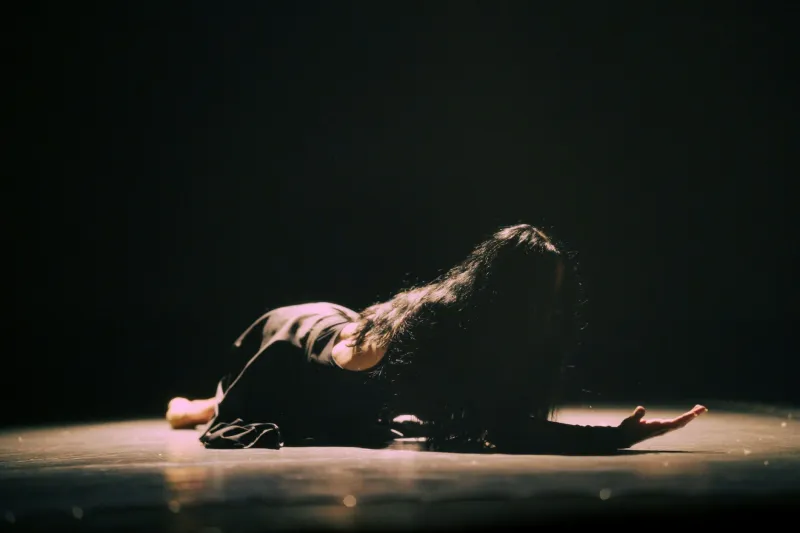
There is a moment in choreographer Antoine Hunter's work when the stage seems to breathe differently. The music, if present at all, recedes into the background. What fills the space instead is something harder to name — a visual pulse, a weight that travels through the floor, a conversation conducted entirely in the architecture of the body. For audiences accustomed to following dance by tracking melody, the experience can be quietly disorienting. For Hunter, who is Deaf, it is simply home.
Hunter, a Bay Area-based artist and founder of the Urban Jazz Dance Company, is among a growing cohort of Deaf and hard of hearing choreographers whose practices are forcing American contemporary dance to confront a foundational bias it has long left unexamined. The assumption that rhythm is auditory — that dance is, at its core, a response to sound — turns out to be far more culturally constructed than the field has been willing to admit.
Feeling the Floor
For Deaf dancers, vibration is not a secondary or compensatory sense. It is primary. The bass frequencies of a sound system travel through stage floors, through bare feet, through the sternum and the jaw. Many Deaf performers describe an acute sensitivity to these physical waves that hearing dancers, accustomed to processing rhythm aurally, may never fully develop.
Choreographer and educator Willy Conley, who has written extensively on Deaf theater and performance, has noted that the Deaf body in motion often carries a quality of hyper-presence — a groundedness that hearing performers sometimes struggle to achieve precisely because their attention is divided between listening and moving. When the auditory channel is removed or diminished, other channels expand to fill it.
This is not metaphor. Research in sensory neuroscience has documented the phenomenon of cross-modal plasticity, in which the brain's auditory cortex, deprived of its typical input, is recruited for the processing of visual and tactile information. In practical terms, this means that a Deaf dancer's nervous system may be processing spatial and rhythmic information through pathways that differ meaningfully from those of a hearing counterpart. The choreographic implications are significant.
Visual Rhythm as a Compositional Language
If vibration is one pillar of Deaf dance practice, visual rhythm is another. The timing of movement — the phrasing, the syncopation, the breath between gestures — can be organized entirely through visual cues. A shift in a partner's weight, the arc of an arm reaching its apex, the moment a body completes its turn: these become the metronome.
Companies such as Willy Conley's and, most prominently, the Washington, D.C.-based Gallaudet Dance Company — affiliated with Gallaudet University, the world's only liberal arts university designed for the Deaf and hard of hearing — have developed sophisticated visual scoring systems that function much as musical notation does for hearing ensembles. Spatial anchors, eye contact protocols, and peripheral awareness become the infrastructure of collective timing.
What emerges on stage is a kind of choreographic counterpoint that is simultaneously more visible and more internal than conventional dance. The effort that hearing performers invest in listening is redirected entirely into watching and feeling. The result, for audiences willing to recalibrate their own perception, can be startling in its clarity.
ASL as Choreographic Source Material
American Sign Language occupies a unique position in Deaf dance practice. It is not merely a communication system that dancers happen to share; it is a kinetic art form in its own right, one with its own spatial grammar, its own sense of timing, and its own aesthetic conventions around shape, flow, and emphasis.
Several choreographers working in this space have drawn directly from ASL's formal properties — its use of the signing space in front of the body as a three-dimensional canvas, its capacity for simultaneity (signing two things at once in a way spoken language cannot replicate), and its deeply embodied relationship to meaning. Antoine Hunter's choreography, in particular, has been described by critics as a kind of expanded ASL, in which the gestural logic of the language is stretched across the full body and into space.
This relationship between linguistic structure and movement vocabulary raises questions that extend well beyond the Deaf community. It asks, implicitly, what other movement languages exist that dominant dance culture has not yet learned to read.
Challenging the Audience, Expanding the Art
The work of Deaf choreographers does not ask hearing audiences to simulate Deafness. It asks something more interesting: that they become more fully present as visual and kinesthetic witnesses. In a cultural moment when dance is increasingly consumed through small screens and at half-attention, this demand carries a particular urgency.
Several major American presenters, including venues affiliated with the Kennedy Center's Millennium Stage programming and regional festivals such as the American Dance Festival, have in recent years made more deliberate space for Deaf and disability-centered performance. The conversations accompanying these presentations — about access, about artistic authority, about whose sensory experience gets to define an art form — are among the most generative currently happening in the field.
For Ink & Dance, whose editorial commitment lies precisely at the intersection of movement and visual expression, the work of Deaf choreographers represents something close to a thesis statement made flesh. The canvas here is the body itself, read not through the ears but through the eyes, the floor, the air between performers. The ink is kinetic, written in a script that hearing culture is only beginning to learn.
The rebellion, as it turns out, was never silent. It simply required a different kind of listening.