Skin Deep, Stage Wide: When Tattoo Artists and Dancers Claim the Body as Their Shared Medium
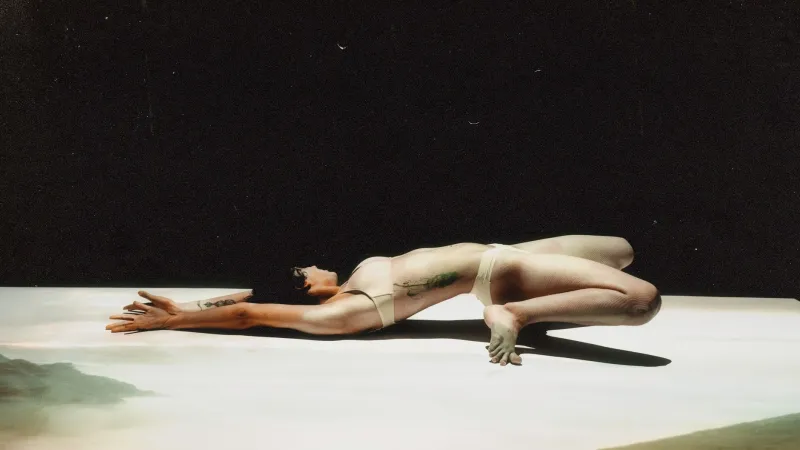
There is a particular tension that arrives in the room when a tattoo needle meets skin before a live audience. It is not quite the hush of a concert hall, nor the charged stillness of a gallery opening. It is something rawer, more contingent — closer, perhaps, to the held breath before a dancer launches into an unrehearsed phrase. That convergence of sensation, risk, and witness is precisely what a growing cohort of American artists is now treating as its primary material.
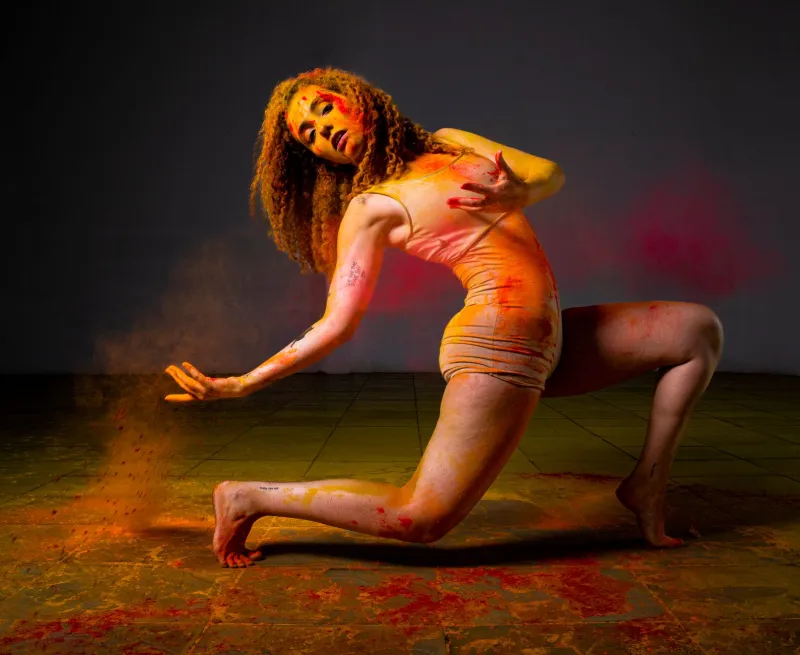
Across cities from Portland to Philadelphia, a loosely affiliated community of tattoo artists and movement practitioners is staging performances in which the act of tattooing unfolds in real time alongside — and in direct conversation with — improvised dance. The human body is not a backdrop in these works. It is the canvas, the instrument, and the stage, all at once.
A Medium Born from Mutual Restlessness
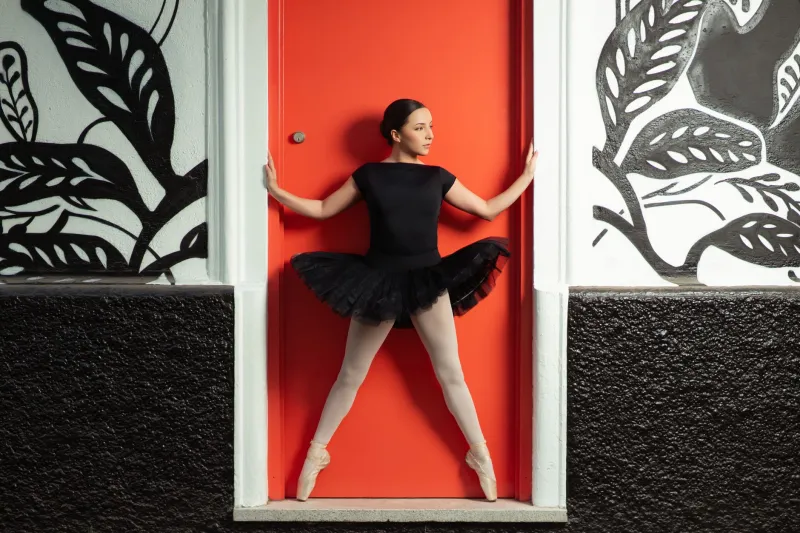
The impulse driving this collaboration is, in part, a shared dissatisfaction with the limits of each form in isolation. Tattooing has long been recognized as a sophisticated visual art, yet its practice is typically sequestered: a private appointment, a curtained booth, an intimate exchange between artist and client that the wider world never witnesses. Dance, for its part, has spent decades arguing for its legitimacy alongside painting and sculpture in fine-art contexts — a case that Ink & Dance has tracked across numerous performance spaces. What neither form had fully explored, until recently, was the possibility of dissolving the boundary between them entirely.
"I kept thinking about the fact that the moment I finish a tattoo, the artwork starts moving," says one Brooklyn-based tattoo artist who has staged three collaborative events over the past two years, each pairing her linework with an improvising dancer who responds, in real time, to the sound of the machine and the emerging image. "That movement was always part of the piece. I just wasn't acknowledging it."
For the dancers involved, the appeal is equally conceptual. Improvisation, as a practice, has always been interested in constraint — in what the body does when it is given a rule, a score, a specific condition. The presence of a tattooist working on one performer's skin introduces a constraint that is both physical and durational: the tattooed dancer must negotiate stillness and motion simultaneously, holding parts of the body quiet while other parts respond freely to music, to the audience, to the sensation itself.
The Body as Contested Territory
What makes these performances more than novelty is the seriousness with which their creators approach questions of consent, permanence, and cultural meaning. A tattoo, unlike a brushstroke on paper, cannot be undone. Every performance in this genre is, therefore, also a negotiation — sometimes a public one — about what it means to mark a body permanently in front of witnesses.
Several practitioners in this space have developed what they describe as "living scores": pre-performance agreements between the tattooist and the dancer that outline not a fixed design but a set of parameters — a region of the body, a palette of imagery, a duration — within which the tattooist improvises. The dancer, meanwhile, develops a movement response in rehearsal but does not fix it. On the night of the performance, both artists are genuinely discovering the final work together.
This approach carries deliberate echoes of the Fluxus movement and the durational performance traditions associated with artists like Marina Abramović, whose influence on American performance art remains pervasive. Yet the tattoo collaborations diverge from that lineage in a crucial respect: the primary medium is not endurance or institutional critique, but craft. Both the tattooist and the dancer are, first and foremost, skilled practitioners of a discipline with deep aesthetic traditions, and the performances are as interested in the beauty of the resulting image and movement as in any conceptual provocation.
What the Audience Witnesses
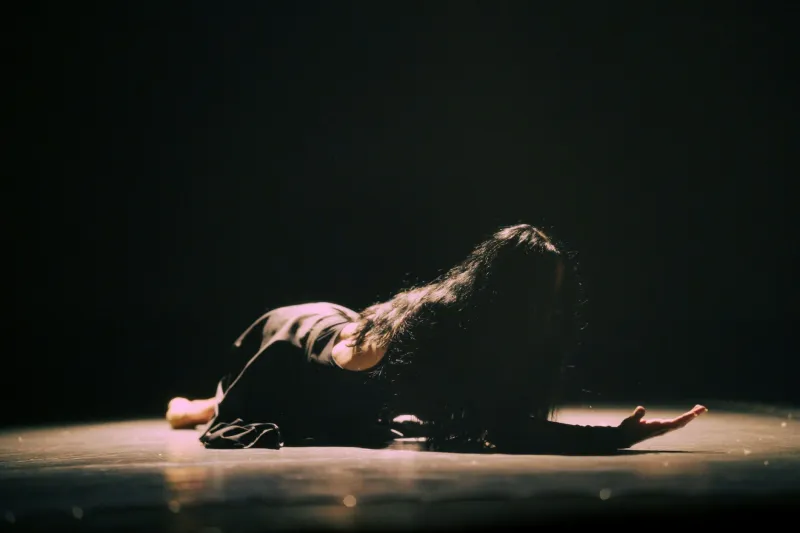
Attending one of these events is an experience that resists easy categorization. The audience typically occupies a loose perimeter around the performers — there are rarely fixed seats — and is free to move closer or retreat as the work unfolds. The sound of the tattoo machine, a low, insistent buzz, functions almost as a score in itself, punctuating the dancer's phrases and giving the room a pulse that no DJ or live musician could replicate.
Viewers frequently report a heightened awareness of their own bodies during the performance — a somatic sympathy, perhaps, or simply the reminder that flesh is the medium through which all art, ultimately, is received. That quality of embodied attention is something choreographers have long sought to cultivate in audiences. Here, it arrives unbidden, a byproduct of watching something irreversible happen in real time.
"People don't know where to look," notes one Chicago-based dance artist who has performed in several such collaborations. "They're watching my face, watching the needle, watching my hands, watching what's appearing on my arm. That's a kind of distributed attention that I find really interesting as a performer. It's not the focused gaze of the proscenium. It's more like the way you look at a painting — scanning, returning, discovering."
American Attitudes and the Newly Sovereign Body
That this movement is gaining momentum in the United States at this particular cultural moment is not incidental. American conversations about bodily autonomy, identity, and self-expression have rarely been more charged, and the tattooed body has become, for many, a site of explicit political and personal declaration. To place that body at the center of a live performance — to make the act of claiming it an event that others are invited to witness — is to participate, whether consciously or not, in a broader cultural argument.
Tattoo culture in America has also undergone a significant demographic expansion over the past two decades, crossing boundaries of class, gender, and age that once made it a more narrowly coded practice. That expansion has brought with it a new seriousness in how tattooing is discussed and exhibited, with dedicated galleries and museum retrospectives now giving ink the institutional recognition it long sought. The collaboration with performance art feels, in this context, like a natural next step: not an attempt to borrow legitimacy from a neighboring discipline, but a genuine artistic conversation between equals.
Where the Movement Goes Next
Those working in this space are thoughtful about its risks. The potential for spectacle to overwhelm substance is real, and several artists have spoken candidly about performances that tilted too far toward the provocative and lost the quieter, more careful qualities that make the best of this work compelling. There are also ongoing conversations about documentation — whether video adequately captures what happens in the room, and what is lost when the irreducible liveness of a tattooing performance is translated into a shareable clip.
What seems certain is that the conversation between ink and movement is not a passing curiosity. The artists pursuing it are doing so with rigor, with genuine investment in both disciplines, and with a conviction that the body — living, marked, in motion — is one of the most honest stages available to American art right now. At Ink & Dance, that conviction feels less like a manifesto and more like a recognition: the canvas was always moving. Some artists are simply finally saying so out loud.