Choreography Without a Camera: The Artists Choosing Disappearance Over Documentation
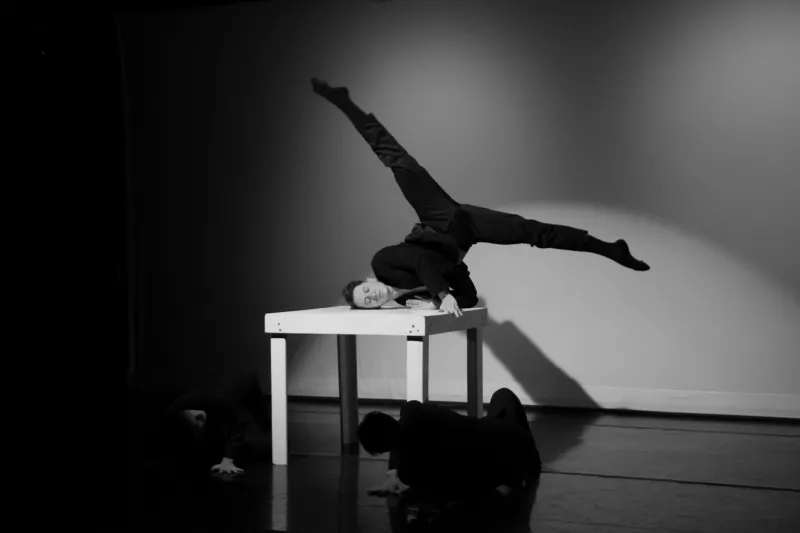
There is a particular kind of courage required to make something and then let it go completely. In a cultural moment defined by the compulsive urge to capture — to screenshot, clip, archive, and stream — a quiet but determined faction of American choreographers is doing precisely the opposite. They are building work designed to vanish. Not by accident, not through institutional neglect, but by deliberate, philosophically grounded intention.
This is the anti-archive movement, and it is more disruptive than it first appears.
The Frame That Changes Everything
To understand why some choreographers are pushing back against film documentation, it helps to understand what a camera actually does to a dance. The lens selects. It flattens three dimensions into two. It privileges whatever falls within its field of view and erases the peripheral, the atmospheric, the felt. A performance that reverberates through the body of a live witness — through vibration, breath, spatial proximity — is translated, by the recording process, into something categorically different: a video of a dance, not the dance itself.
For many artists, this distinction has become impossible to ignore. When a work is filmed, that film often becomes the de facto historical record. Future scholars, students, and audiences encounter the recording rather than the event. The document supplants the experience. And in doing so, it subtly rewrites what the work was — reshaping memory, narrowing interpretation, and granting a kind of false permanence to something that was always meant to be alive and temporary.
"The recording doesn't save the piece," one New York-based choreographer, who has instituted a strict no-documentation policy for her recent works, explained during a panel discussion at a Brooklyn performance space last spring. "It saves a version of the piece as seen through one set of eyes, from one angle, on one night. And then everyone treats that version as the truth."
Ink That Refuses to Dry
The philosophical roots of this resistance run deep. Postmodern dance has long grappled with ephemerality as both a formal property and an ethical stance. Figures associated with the Judson Dance Theater in the 1960s questioned the hierarchy that placed durable, object-based art above time-based performance. The body in motion, they argued, was not a lesser medium for lacking a permanent product. It was a different kind of canvas entirely — one that communicated precisely through its refusal to stay still.
What is new in the current moment is the urgency. The ubiquity of smartphones and social platforms has made undocumented performance feel almost radical. When every other art form is competing for algorithmic visibility, choosing invisibility reads as a genuine provocation. These choreographers are not simply being modest. They are making an argument about what art is for.
Some are going further than personal policy. Certain companies are now incorporating documentation restrictions into their contractual agreements with venues, explicitly prohibiting video capture — professional or amateur — as a condition of presenting the work. Audiences are asked, before entering, to surrender not just their phones but the expectation that they will leave with anything they can share.
What Disappearance Actually Produces
The practical effects of this approach on the creative process are, by multiple accounts, significant and often surprising. When choreographers remove the possibility of a recorded legacy, they report a fundamental shift in how they approach the work itself.
Without the camera as a future audience, the only audience that matters is the one present in the room. This reorientation — from posterity to presence — changes what questions get asked during the making process. Details that would read clearly on screen but go unnoticed in a live space become less interesting. Conversely, qualities that are almost impossible to film — the texture of collective breath in a darkened theater, the way a particular movement creates a pressure change that an audience member seated in the third row feels in their sternum — become primary concerns.
"I started making work for bodies in space rather than bodies on screen," said one Chicago-based artist whose recent site-specific pieces have been presented without any recording apparatus. "That sounds obvious. It should be obvious. But it wasn't, until I took the camera away."
There is also something to be said for what restriction does to the audience. When viewers know there will be no recording — no safety net of rewatchability, no shareable clip to post afterward — their attention sharpens. They arrive understanding that this is all they will get. The experience becomes, by necessity, more embodied. People remember differently when they know memory is the only record.
The Equity Question
Not everyone finds this movement straightforwardly liberating. Critics have raised legitimate concerns about access. If a performance exists only in the room where it happens, who gets to be in that room? Dance has historically struggled with geographic and economic barriers to attendance. Video documentation — imperfect as it is — has served as a democratizing force, allowing people in rural communities, people with disabilities that prevent attendance, and people without the financial means to purchase tickets to encounter work they would otherwise never see.
An anti-documentation stance, however principled, risks encoding a new kind of exclusivity. The work becomes, in a very literal sense, available only to those who can physically and financially access it. This tension is real, and the artists most committed to ephemerality are, to their credit, generally aware of it. Some are experimenting with hybrid approaches: restricting documentation of the performance itself while investing heavily in pre- and post-performance materials — essays, drawings, conversations — that offer a different kind of access without pretending to substitute for the live event.
The Sketchbook, Not the Archive
There is something that resonates, from the perspective of this publication, in the image of a choreographer working without the security of a camera. It recalls the artist who makes marks on paper without the intention of framing them — who draws to think, not to preserve. The sketchbook rather than the archive. The process rather than the product.
Ink & Dance has long been interested in the places where movement and visual expression converge, and this particular conversation sits squarely at that intersection. What these choreographers are doing is, in a sense, returning dance to its most fundamental nature: a practice that leaves its marks not on film or canvas but on the people who were present, who carry the impression of it forward in their bodies and their memories.
That is a different kind of permanence. Quieter, less verifiable, impossible to stream. But perhaps, for that very reason, more honest about what a live performance has always actually been.
The eraser, it turns out, is not the enemy of the work. For these artists, it is the work's most essential tool.